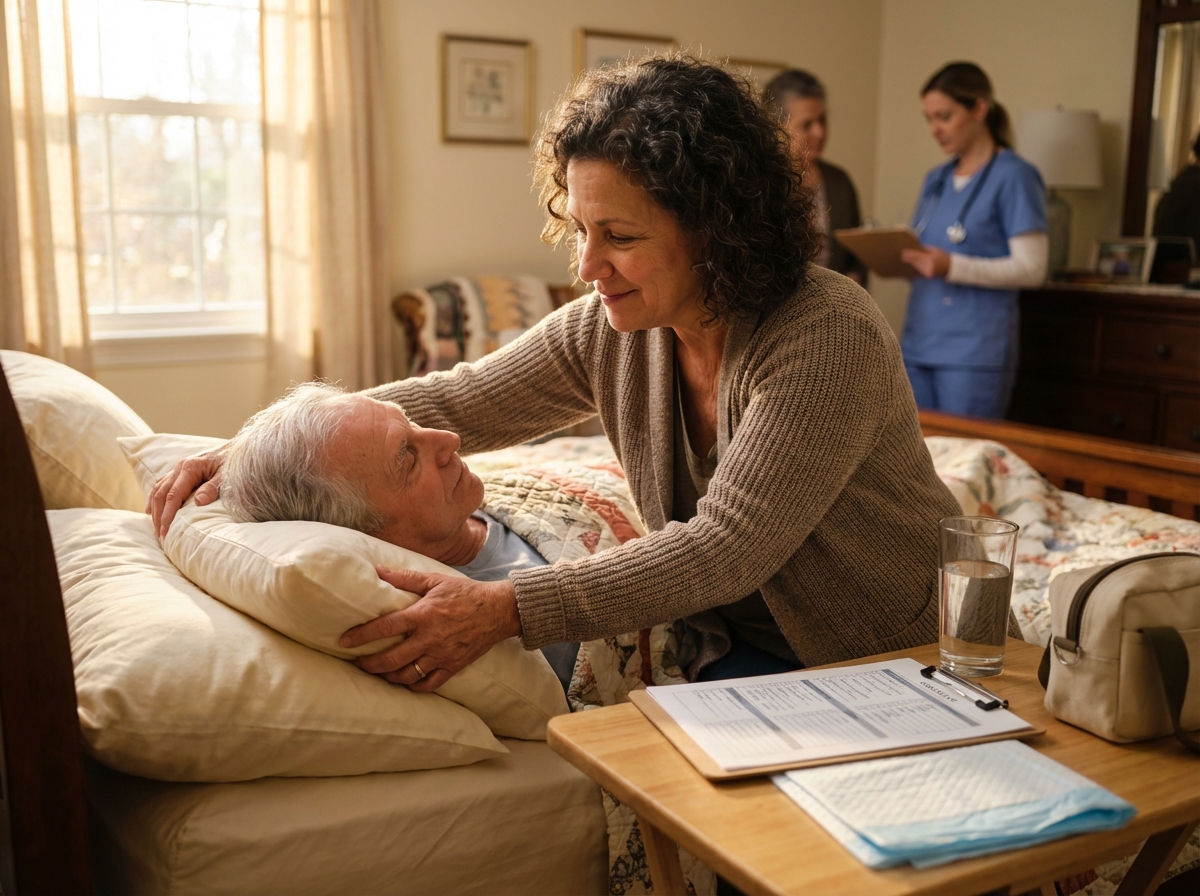
Caring for a bedbound elderly relative in the final weeks of life requires practical know-how and emotional steadiness. This article explains the typical timeline and physical signs to expect in the last weeks, and gives step-by-step bedside care routines—hygiene, repositioning, monitoring, symptom checks, checklists and communication tips—so family caregivers in the U.S. can provide safe, comforting care at home.
Understanding the timeline and stages in the home setting
Understanding how a serious illness progresses helps families move from a state of constant crisis to a state of quiet preparation. Most seniors at home follow one of three common paths. Some experience a steady decline over several years, which is very common with dementia or general frailty. Others face a series of health crises where they almost recover but never quite reach their previous strength. This “peaks and valleys” pattern is typical for heart or lung disease. Then there are sudden events like a major stroke that change everything in an instant. Recognizing these patterns allows you to adjust your daily care priorities before the final weeks arrive.
In the United States, medical teams use specific markers to estimate how much time remains. They often look at the Palliative Performance Scale or PPS. This scale measures how much a person can do for themselves. When a senior spends more than half their day in bed and needs help with most basic tasks, they often meet the criteria for hospice. Hospice eligibility usually requires a doctor to certify that the person has six months or less to live if the illness follows its natural course. It is a common misconception that hospice is only for the final days. In fact, the average hospice stay was about 97 days in 2020. Early enrollment provides the family with more support, including nursing visits and medical equipment.
Distinguishing Palliative and Hospice Care
It is important to understand the difference between these two types of support. Palliative care provides comfort and symptom management at any stage of a serious illness. A person can receive palliative care while still seeking treatments meant to cure or slow the disease. Hospice is a specific type of palliative care for the very end of life. It focuses entirely on quality of life and comfort when curative treatments are no longer an option or no longer desired. In the U.S., the Medicare Hospice Benefit covers virtually all medications related to the terminal diagnosis.
| Feature | Palliative Care | Hospice Care |
|---|---|---|
| Eligibility | Any stage of serious illness | Prognosis of 6 months or less |
| Treatment Goals | Can include curative efforts | Focuses solely on comfort |
| Medicare Coverage | Standard medical benefits apply | Comprehensive hospice benefit |
| Location | Hospital, clinic, or home | Primarily in the home setting |
Clinical Markers and Daily Priorities
Clinicians watch for several key markers to track the timeline. A significant drop in appetite is often the first sign that the body is slowing down. Weight loss of 10 to 15 percent in the final month is typical. As the senior becomes more bedbound, the risk of pressure injuries increases. Research shows that the risk of skin breakdown doubles if a person is not repositioned every two hours. Caregiving priorities shift during this time from long-term health to immediate comfort. This means focusing on mouth care every two to four hours and keeping the skin clean and dry rather than worrying about calorie intake or physical therapy.
Legal and Advance Care Steps
Taking legal steps early prevents confusion during a crisis. Every family should ensure three specific documents are in place. First, an Advance Directive outlines the person’s wishes for medical treatment. Second, a Power of Attorney for Healthcare names a person to make decisions if the senior cannot speak for themselves. This person, often called the healthcare proxy, has the legal authority to resolve family disagreements regarding care choices. Third, a POLST or MOLST form turns these wishes into actual medical orders that emergency responders must follow. These forms are available in more than 45 states and help avoid unwanted hospitalizations or aggressive interventions like CPR when the goal is a peaceful death at home.
Cultural and Spiritual Influences
Timing and decisions are deeply influenced by cultural and spiritual preferences. Some families may want specific rituals performed as death nears, while others may prefer a quiet environment with only immediate family. It is helpful to discuss these preferences early. Some cultures view the end of life as a communal event, while others see it as a private transition. Spiritual beliefs can also influence how a family views pain medication. Some may want the senior to remain as alert as possible, while others prioritize the complete absence of pain. Respecting these values is a vital part of providing dignity in care.
Transitioning from Weeks to Days
Recognizing the shift from the final weeks to the final days helps caregivers prepare emotionally. One of the most reliable signs is a significant decrease in urine output. When the kidneys begin to shut down, urine becomes very dark and may stop entirely. This often happens within three days of death. You may also notice changes in breathing patterns. Periods of apnea, where breathing stops for several seconds, or Cheyne-Stokes breathing, which is a cycle of shallow and deep breaths, are highly specific indicators that death is imminent. Clinical research also suggests checking for the absence of a radial pulse in the wrist, which is a specific sign that death is likely within three days. Physical changes like mottling of the skin on the feet and knees also signal that the body is redirecting blood flow to the vital organs. When these signs appear, the focus of care moves to presence, gentle touch, and ensuring the senior feels safe and loved.
Physical and behavioral signs to expect in the final weeks
The transition into the final weeks of life involves a series of predictable physical and behavioral shifts. These changes reflect the body slowing its systems to conserve energy. Understanding these markers helps families move from a mindset of fixing problems to one of maintaining comfort.
Changes in Intake and Physical Appearance
Progressive decline in appetite and oral intake
In the final two to three weeks, most seniors show a significant lack of interest in food. This is a physiologic response to a slowing metabolism. The body no longer requires the same caloric fuel. Forcing food can lead to discomfort or aspiration. You may notice they only take a few bites or eventually stop eating entirely. This transition often happens weeks before the end. It is a natural part of the process. You can offer small sips of water or ice chips for comfort, but do not worry about nutrition.
Weight loss and increased frailty
Visible weight loss becomes more pronounced in these final weeks. The face may appear sunken. The skin can look thinner. This frailty is often accompanied by extreme weakness. The person might no longer be able to sit up in bed or help with their own care. This is a sign that the body is utilizing its remaining energy for vital functions rather than muscle maintenance.
Decreased urine output and darker urine
As fluid intake drops and the kidneys begin to slow down, urine output decreases. The urine that is produced often appears dark or concentrated. This is a common sign in the final week of life. Monitoring this is important for hygiene. If you see less than 30 mL of urine per hour, this is known as oliguria. If the person stops producing urine entirely for more than 12 hours, it is known as anuria. This is a highly specific sign of the final stages.
Neurological and Behavioral Shifts
Increased sleep and reduced awareness
Seniors in their final weeks often sleep for 18 hours or more each day. They may become difficult to rouse. This drowsiness gradually transitions into a semi-conscious or unresponsive state. By the final two or three days, many patients are no longer able to respond to verbal or visual stimuli. This is not a coma in the traditional sense. It is a natural withdrawal from the external world. You should continue to speak to your loved one. Hearing is often the last sense to remain.
Terminal restlessness and delirium
About half of all patients experience confusion or agitation in the last two weeks. This is called terminal restlessness. The person might pick at their sheets or try to get out of bed despite their weakness. They may see people who are not there. This is often caused by metabolic changes or a decrease in oxygen to the brain. If the restlessness becomes distressing or the person seems to be in a state of panic, it is time to contact your hospice team for medication to help them relax.
Pain indicators in nonverbal patients
When a person can no longer speak, you must look for physical cues of pain. Watch for furrowed brows or clenched teeth. Moaning during repositioning is a common indicator. You might also see a rigid body posture or guarded movements. Using a tool like the PAINAD scale can help you track these signs. This scale evaluates breathing, vocalization, facial expression, body language, and consolability. A total score of four or higher suggests the person needs a dose of pain medication. If you notice these behaviors, it suggests the current comfort measures need adjustment.
Respiratory and Circulatory Changes
Changes in breathing patterns
Breathing often becomes irregular in the final days. You might see Cheyne-Stokes patterns. This involves periods of shallow breathing followed by deep, rapid breaths and then a pause called apnea. These pauses can last from 10 to 60 seconds. Another sign is mandibular movement. This is when the jaw moves up and down with each breath. These patterns are highly specific indicators that death is likely within three days. A review of clinical signs shows that these respiratory changes are among the most reliable markers for clinicians.
Terminal secretions or the death rattle
A rattling sound during breathing is common in the final 48 hours. It happens because the person can no longer swallow or cough up normal secretions. Saliva pools in the back of the throat. While the sound can be distressing for family members, the patient is usually unaware of it. Repositioning the person on their side or elevating the head of the bed to 30 degrees can help. Suctioning is rarely recommended as it can cause more distress.
Mottling and cool extremities
As circulation fails, the body pulls blood toward the heart and brain. The hands and feet will feel cool to the touch. You may see mottling. This is a purple or blue marbling pattern on the skin. It usually starts at the feet and knees. This change typically appears in the final days or hours. The skin may also look pale or greyish. This is a normal sign of decreased peripheral circulation.
Monitoring and Clinical Red Flags
The focus of care at this stage is comfort. However, certain signs require immediate contact with a hospice nurse or clinician to manage symptoms that could cause suffering. Use the following table to monitor thresholds and identify when to call for help.
| Sign | Monitoring Threshold | Red Flag (Contact Clinician) |
|---|---|---|
| Urine Output | Less than 30 mL per hour | Total absence of urine for 12+ hours |
| Respiratory Rate | Between 12 and 24 breaths per minute | Rate above 30 or below 8 with distress |
| Body Temperature | Slight fluctuations are normal | Fever above 101°F that is sustained |
| Pain Level | Mild grimacing during movement | Uncontrolled agitation or severe moaning |
| Bleeding | Small spots on skin or gums | Sudden or severe bleeding |
Specific Red Flags
You should contact your hospice provider immediately if you observe a new and sudden neurological change such as a seizure. Severe respiratory distress where the person appears to be gasping for air or panicking is also an emergency. If pain cannot be managed with the prescribed doses of medication, do not wait for the next scheduled visit. These situations require professional intervention to restore a state of peace and dignity. The goal is to ensure the environment remains calm and the patient stays comfortable as they transition through these final stages.
Practical bedside care routines for comfort and dignity
Caring for a loved one in their final weeks shifts the focus from medical recovery to pure comfort. When a senior becomes bedbound, the daily routine centers on maintaining dignity and preventing physical distress. This work is quiet and steady. It requires a gentle touch and a watchful eye.
Daily Hygiene and Comfort Schedule
Mouth Care Every 2 to 4 Hours
Dryness in the mouth is common as the body slows down. You should use soft foam swabs dipped in water or alcohol-free mouthwash. Gently wipe the tongue and the inner cheeks. This prevents the mouth from feeling sticky or painful. Apply a thin layer of water-based lip balm to the lips. Avoid glycerin swabs because they can actually dry the mouth out more over time.
Eye and Face Care
Clean the eyes twice a day or whenever you see crusting. Use a soft cloth with warm water. Wipe from the inner corner toward the ear. Use a different part of the cloth for each eye to prevent spreading any irritation. A cool, damp cloth on the forehead can also provide significant relief if the person feels warm or restless.
Nail and Skin Care
Keep fingernails trimmed and clean. This prevents accidental scratching if the person becomes restless. Apply unscented lotion to the arms and legs once a day. Use long, gentle strokes. Do not massage areas where the skin looks red or thin. This could cause more damage to the tissue.
Repositioning and Pressure Injury Prevention
The Two Hour Rule
Moving the body is the best way to prevent pressure sores. You should aim to turn the person every 2 hours. If they are very frail, you might need to do this more often. Use a draw sheet to slide them rather than pulling on their limbs. This protects their skin from friction. Use pillows or foam wedges to keep their knees and ankles from rubbing together. Place a pillow behind the back to keep them tilted at a 30 degree angle.
Mattress and Surface Options
A standard home mattress is often not enough for someone who is completely bedbound. You may need to request an alternating-pressure pad or a low-air-loss mattress from hospice. These surfaces use air pockets to shift weight automatically. This is a key step if you notice redness that does not go away after 15 minutes of turning.
Skin Checks and Moisture Management
Check the skin every time you change a brief or reposition the person. Look closely at the heels, the tailbone, and the hips. Use a barrier cream on the perineal area to protect against moisture from incontinence. If the skin stays wet, it will break down quickly. Change linens immediately if they become damp.
Oral and Swallow Safe Approaches
Transitioning to Comfort Mouth Care
There comes a point when the person can no longer swallow safely. Forcing food or water can lead to choking or fluid in the lungs. When you see coughing or pocketing of food in the cheeks, it is time to stop traditional feeding. Focus on comfort instead. You can offer tiny sips of water or juice from a spoon if the person is alert. If they are not alert, stick to the mouth swabs mentioned earlier.
Managing Secretions
The sound of fluid in the throat can be upsetting for family members. This is often called the death rattle. It usually does not mean the person is in pain. You can manage this by turning the person onto their side. Raising the head of the bed to 30 degrees also helps. Suctioning is rarely needed and can be uncomfortable. It is usually better to let the fluid drain naturally or use medications provided by the hospice team.
Dignified Bed Baths and Incontinence
Safe Bed Baths
Wash one part of the body at a time and keep the rest covered with a blanket. This maintains warmth and privacy. Use no-rinse soap to make the process faster and less tiring for the senior. Talk to them throughout the process. Even if they do not respond, your voice can be very soothing. Grooming like brushing hair or applying a favorite scent helps maintain their identity.
Incontinence Management
Use high-absorbency briefs and disposable underpads. When cleaning the person, be very gentle. Use warm water and soft wipes. Pat the skin dry instead of rubbing it. If you are alone, you can roll the person to one side to slide a clean sheet or pad underneath them. This saves your back and keeps them stable.
Monitoring and Documentation
Keeping a simple log helps you see patterns and provides clear information for the hospice nurse. You do not need a complex system. A simple notebook or a printed table works best.
| Time | Position | Intake/Output | Comfort Score (1-10) | Notes |
|---|---|---|---|---|
| 8:00 AM | Right Side | 2 sips water | 2 | Sleeping quietly |
| 10:00 AM | Back | Mouth care | 4 | Slight moaning during turn |
| 12:00 PM | Left Side | Brief change | 2 | Skin looks clear |
Creating a Calm Environment
The room should be a sanctuary. Keep the lighting dim. Reduce loud noises like the television or heavy foot traffic. Soft music or the sound of a fan can be helpful. Limit the number of visitors in the room at one time. If the person is restless, a calm presence is more important than conversation. You might just sit and hold their hand.
Night Care Tips
Keep a small lamp on so you can see to provide care without waking the person fully. Have all your supplies like gloves, wipes, and swabs within reach of the bed. This prevents you from having to leave the room repeatedly.
Sample Scripts for Caregivers
Explaining Care to Family
We are not giving him water by mouth anymore because he cannot swallow safely. I am using these damp swabs to keep his mouth moist and comfortable. This is the best way to help him right now.
Reporting to a Clinician
I noticed a new area of redness on her tailbone during the 2 PM turn. It did not fade after she was off it for 30 minutes. I have applied barrier cream and moved her to her side.
Focusing on these small, practical tasks provides a sense of purpose. It ensures that the final days are defined by care and respect. For more details on the physical changes you might see, you can refer to VNS Health guidance on physical signs. These routines are the foundation of good end of life care at home.
Symptom management safety and coordinating medical support
Managing symptoms at home requires a balance of physical comfort measures and careful medical coordination. When a senior is bedbound in their final weeks, the goal shifts entirely to quality of life. You will likely work with a hospice team to ensure the environment remains peaceful and pain is kept under control. Research shows that dyspnea and pain affect more than half of patients in their final two weeks. Being prepared with both nonpharmacologic tools and a solid medication plan makes a significant difference in how your loved one experiences these days.
Nonpharmacologic Comfort Measures
Physical Positioning
Changing a person’s position can relieve pressure and help with breathing. If you notice labored breathing or a rattle in the chest, elevating the head of the bed to a 30 degree angle often helps. You can use pillows or foam wedges to support the limbs. This prevents the feeling of breathlessness that often occurs when lying flat.
Sensory Comfort
Cool compresses applied to the forehead or neck can soothe a fever. Since many seniors stop drinking in the final weeks, mouth care is vital. Use foam swabs dipped in water or a small amount of alcohol-free mouthwash every two hours to keep the lips and gums moist. Gentle touch or hand massages can reduce anxiety. Playing soft music or reading in a calm voice provides a sense of security even if the person is no longer responding verbally.
Medication Routes and Transitions
As the body nears the end of life, swallowing becomes difficult or impossible. This usually happens in the final week. You must discuss changing the route of medication with your hospice nurse or doctor when you notice coughing or pocketing of food. Typical routes used at home include the following items.
- Oral Liquids. Concentrated liquids can be dropped into the side of the mouth where they are absorbed by the cheek lining.
- Transdermal Patches. These are placed on the skin to provide a steady level of pain relief over several days. They are excellent for baseline comfort.
- Subcutaneous Injections. A small butterfly needle can be placed under the skin. This allows you or a nurse to give medications without needing to find a vein or force a swallow.
Safe PRN Use and Documentation
PRN stands for medications given as needed. You will likely have a kit for breakthrough pain, anxiety, or secretions. Safety is the priority here. Always use a dedicated dosing log to record the time, the reason for the dose, and the result. This prevents medication errors and helps the clinical team adjust the baseline schedule. Keep all medications in a secure, cool place away from children or pets. If you notice a sudden increase in the need for PRN doses, it is a sign that the underlying symptom is not well controlled. This requires a review by the hospice clinician.
Coordinating with the Care Team
In the United States, hospice services are a comprehensive Medicare benefit. This program covers nursing visits, medications related to the terminal diagnosis, and medical equipment like hospital beds or oxygen. It also includes bereavement support for the family for up to a year after the loss. You should consider enrollment when a doctor provides a prognosis of six months or less. Early enrollment allows the team to stabilize symptoms before a crisis occurs.
| Who to Contact | Reason for Call |
|---|---|
| Hospice Nurse | Changes in breathing, new pain, or skin breakdown. |
| Pharmacist | Questions about drug interactions or side effects. |
| Primary Clinician | Issues unrelated to the terminal diagnosis if not on hospice. |
| Emergency Services | Only for accidents or if comfort care is not the goal. |
Emergency Decisions and Legal Orders
It is important to understand when to call 911 versus calling hospice. If the goal is comfort at home, calling 911 can lead to unwanted hospitalizations and invasive procedures. Respecting advance directives is essential. Ensure you have copies of the Do Not Resuscitate (DNR) order or the Physician Orders for Life-Sustaining Treatment (POLST) form nearby. These documents tell emergency responders to honor the person’s wish for a natural death. If a crisis occurs, your first call should be to the hospice emergency line. Only call 911 if there is a massive medical emergency that you want to treat with life-saving measures, such as a severe hemorrhage of more than 500 milliliters. Otherwise, the hospice team is available 24/7 to talk you through the situation or send a nurse to the home.
Organizing the Home Care Kit
A well organized care kit reduces stress during high pressure moments. This kit should include the following supplies.
- Gloves, wipes, and barrier creams for hygiene.
- Mouth swabs and lip balm.
- A current medication list with clear dosing instructions.
- The dosing log and a notebook for observations.
- Contact numbers for the hospice agency and the lead physician.
- Copies of legal documents like the Healthcare Power of Attorney.
When you talk to clinicians, describe what you see in plain language. Instead of saying the person is “worse,” note that the respiratory rate has increased to 30 breaths per minute or that they have not produced urine in eight hours. These specific details help the medical team make better decisions. You can find more details on physical signs at the end of life to help guide your observations.
Caregiver Safety and Respite
Caring for a bedbound senior is physically and emotionally demanding. You must prioritize your own safety to prevent injury while repositioning your loved one. Use proper lifting techniques and ask for help when moving someone. Medicare hospice benefits include a respite care option. This allows the patient to stay in a Medicare approved facility for up to five days so the caregiver can rest. Utilizing this service is not a sign of failure. It is a necessary step to ensure you can continue providing high quality care until the end.
Final thoughts and practical next steps
The transition into the final weeks of life brings a shift in focus from medical intervention to the quality of every remaining moment. Research shows that certain symptoms become very common during this period. Dyspnea affects about 56.7 percent of people in their last two weeks. Pain is present for 52.4 percent. Respiratory secretions or the death rattle occur in 51.4 percent. Confusion is noted in 50.1 percent of cases. Understanding these numbers helps you realize that what you see is a natural part of the body slowing down. You are not failing as a caregiver when these signs appear. They are indicators that the body is preparing for rest. Your role now is to provide a calm environment and maintain the physical comfort of your loved one through steady and gentle care.
Consolidate your care plan
Ensure your bedside kit is fully stocked with hygiene supplies, mouth swabs, and barrier creams to prevent unnecessary trips out of the room. Maintain the daily log for repositioning and medication; this simple tool becomes a shared language for visiting nurses and family members, ensuring consistency. Review the medication plan with your hospice provider, specifically asking about transitioning pills to liquids or patches to avoid swallowing difficulties.
Finalize the environment and legalities
Keep the POLST or DNR forms visible on the refrigerator or bedside to prevent unwanted emergency interventions. Manage the flow of visitors by setting clear boundaries or using a group chat for updates, allowing the senior to rest without the exhaustion of constant social interaction. If you feel overwhelmed, remember that hospice benefits often include respite care. Reaching out to the National Hospice and Palliative Care Organization (NHPCO) or local support groups can provide necessary guidance.
Coping with the emotional weight
Taking care of yourself is part of taking care of your loved one. Take short walks outside or spend a few minutes in silence every day. When people ask how they can help give them a specific task. Ask a neighbor to pick up groceries or a friend to sit by the bed for an hour while you nap. People often want to help but do not know what you need. Being direct helps everyone. Remember that your presence is the most valuable gift you can give right now. Simply holding a hand or sitting quietly in the room provides immense comfort.
Focusing on comfort and presence allows you to make the most of this time. The physical tasks of care are important but the emotional connection is what remains. You are providing a safe and loving space for a significant life transition. Trust your instincts and lean on the professional support available to you. Every small act of care like moistening dry lips or adjusting a pillow makes a difference in the comfort of your loved one.
Document any changes you see in breathing or skin color to help the medical team make the best decisions. If symptoms like pain or agitation become hard to manage do not wait for the next scheduled visit. Seek help early from your hospice nurse or doctor. Early intervention can prevent a symptom from becoming a crisis. You are the expert on your loved one and your observations are the most important tool the medical team has. For more detailed information on physical changes you can refer to Physical Signs at the End of Life from VNS Health.
References
- A Review of Clinical Signs and Symptoms of Imminent End-of-Life in … — They reported highest prevalence of dyspnea (56.7%), pain (52.4%), respiratory secretions/death rattle (51.4%), and confusion (50.1%) in the last 2 weeks of …
- End of Life Signs: What to Expect in The Last Months of Life — Our timeline provides clear and gentle insights into each stage to help you navigate the end-of-life journey with understanding and peace.
- Physical Signs at the End of Life | VNS Health | New York — The Final Weeks · Isn't hungry or thirsty · Spends most or all of their time in bed · Is very drowsy, sleeps much more, and gradually slips into unconsciousness …
- Physical Examination of the Dying Patient — Five highly specific signs are loss of radial pulse; mandibular movement during breathing; anuria; Cheyne-Stokes breathing; and the “death …
- Last Days of Life (PDQ®)–Patient Version – National Cancer Institute — Fatigue is one of the most common symptoms in the last days of life. … Feeling short of breath is common and may get worse during the final days …
- The process of dying | healthdirect — The process of dying differs between people. Find out what can happen in the weeks, days and hours before death, and after someone has died.
- What to Expect When a Person with Cancer Is Nearing Death — The end of life is different for everyone. No one can predict how long the final stage of life will last or when death will happen.
- Pain Management, End-Stage Indicators, & Navigating Conversations — In a study published last year in the Journal of Clinical Oncology, only 5 percent of cancer patients with less than six months to live had an accurate …
Legal Disclaimers & Brand Notices
The content provided in this article is for informational purposes only and does not constitute professional medical advice, diagnosis, or treatment. Always seek the advice of a physician or other qualified health provider with any questions you may have regarding a medical condition, end-of-life care, or the management of clinical symptoms. Never disregard professional medical advice or delay in seeking it because of something you have read in this article.
All product names, logos, and brands mentioned or cited in this text are the property of their respective owners. All company, product, and service names used are for identification purposes only. Use of these names, trademarks, and brands does not imply endorsement.