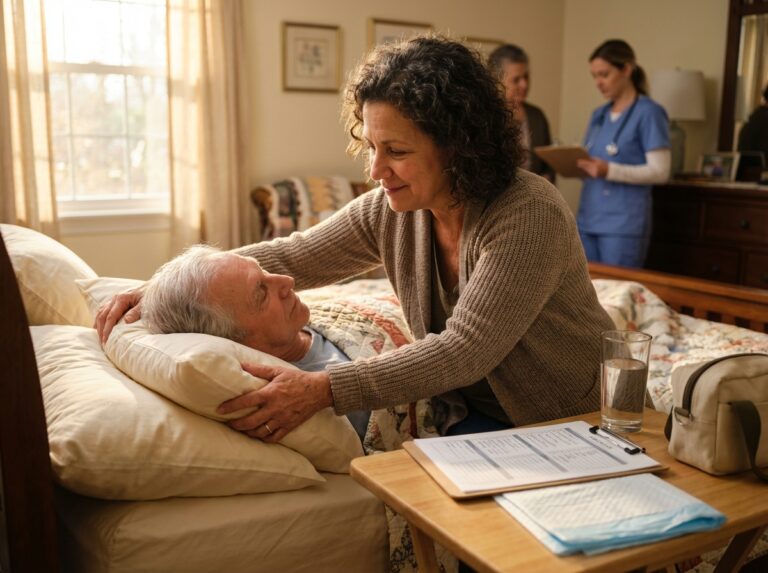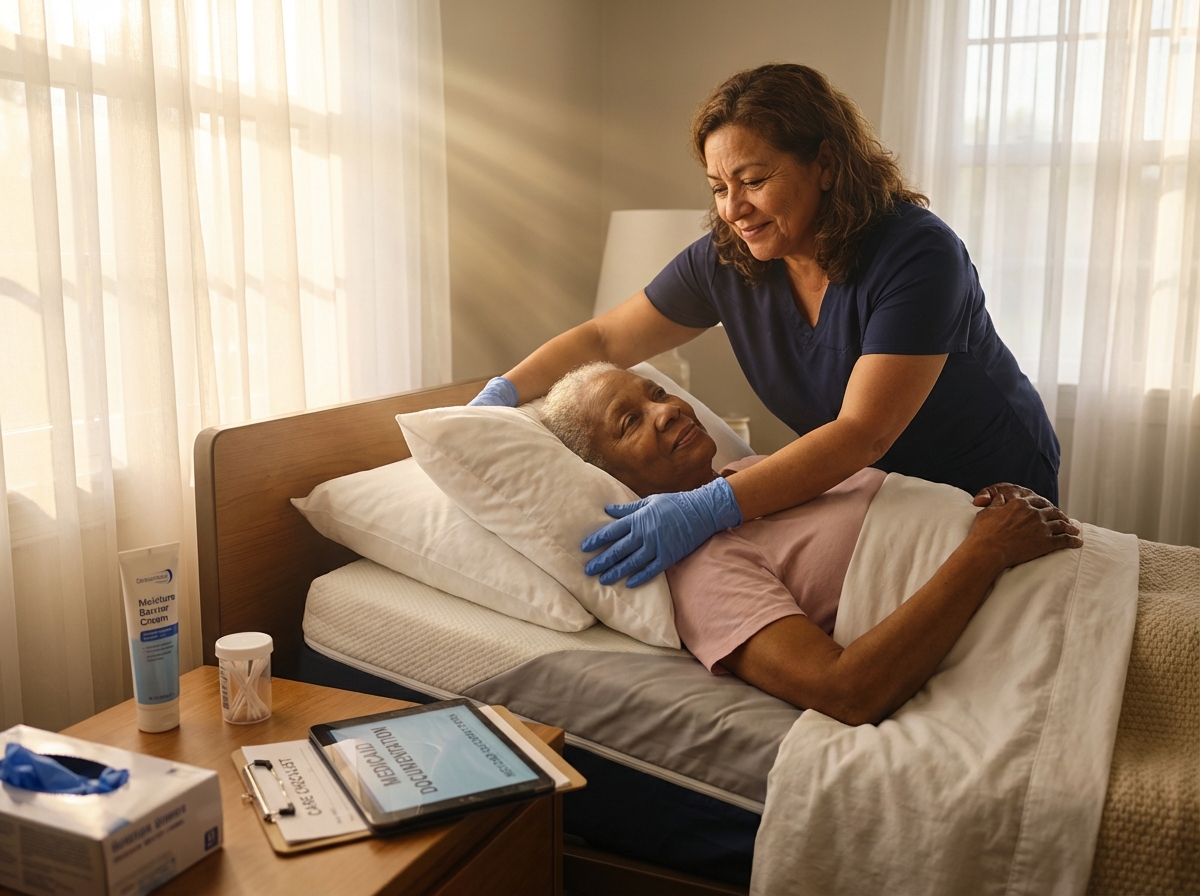
Many families can both protect a loved one’s dignity and receive pay through Medicaid’s home- and community-based programs. This article explains which Medicaid options may allow family caregivers to be paid and gives detailed, practical bedside care guidance for bedbound seniors — hygiene routines, repositioning schedules, monitoring signs, equipment, and ready-to-use checklists.
Medicaid pathways that can pay family caregivers
The landscape of family caregiving has shifted significantly. By late 2025, the number of Americans providing care for a loved one reached 63 million, a massive increase from a decade ago. Most of these caregivers look after adults over the age of 18, often providing more than 40 hours of support every week. This work comes with high financial and physical costs. A recent New Report Reveals Crisis Point for America’s 63 million Family Caregivers highlights that many struggle to balance these duties with their own health. Medicaid has become a vital resource for these families. As the primary payer for long-term care in the United States, it offers several specific pathways that allow family members to receive a paycheck for the bedside care they provide.
Home and Community Based Services Waivers
The most common way to get paid as a family caregiver is through 1915(c) waivers. Designed to keep seniors out of nursing homes, these programs allow Medicaid to pay for services in a home setting, covering personal care and help with daily activities. In 2025, there are over 300 active waivers across the country. Each state designs its own program, meaning rules in Florida differ from those in Texas. Some waivers focus specifically on seniors, while others serve people with physical or intellectual disabilities. These programs usually cap the number of participants, which can lead to waiting lists in some states.
Consumer Directed Programs
Many states have moved toward a model called participant direction, giving the senior the power to choose their own caregiver. California operates In-Home Supportive Services (IHSS), while New York uses the Consumer Directed Personal Assistance Program (CDPAP). In these models, the senior acts as the employer and can hire a daughter, son, or friend as their aide. This approach helps solve the direct care worker shortage. According to the Caregiving in the US 2025 – AARP report, about 11 million caregivers now receive some form of compensation through these programs. The senior is responsible for training and supervising the caregiver, ensuring care is dignified and fits personal preferences.
Alternative Medicaid Mechanisms
States use other legal structures to pay family members. Some utilize 1115 demonstration waivers to test new care delivery methods. Others use the 1915(i) state plan option, which differs because it does not have a waiting list; if a senior meets the criteria, they are entitled to services. Additionally, the Program of All-Inclusive Care for the Elderly (PACE) is available for people age 55 and older requiring a nursing home level of care. Some PACE programs allow the senior to use part of their budget to pay a family member. Another model, structured family caregiving, provides a daily stipend rather than an hourly wage. About ten states currently use this per diem model.
The Role of Fiscal Intermediaries
You do not have to manage the complicated parts of being an employer alone. Medicaid programs use fiscal intermediaries to handle the paperwork. These organizations act as the employer of record for tax purposes, processing weekly timesheets, withholding Social Security and Medicare taxes, and handling unemployment insurance and workers’ compensation. This system ensures the caregiver receives a legal W-2 at the end of the year, protecting both the senior and caregiver from tax issues. Most programs now require Electronic Visit Verification (EVV), meaning you likely need a smartphone app to clock in and out.
Payment Limits and Restrictions
Every program has limits on hours and budget. A typical budget might be around $30,000 per year. Hourly rates usually range between $12 and $25 depending on the state. Rules regarding which relatives can be paid vary; most states allow adult children and grandchildren to work as aides. Paying a spouse is more restricted, with about half of states allowing spousal payment under specific waivers. Parents of minor children are usually ineligible. Legal guardians can sometimes be paid if they do not have a legal obligation to provide free care. Check your specific state manual for these details.
How to Find Your State Program
Rules change frequently. Contact your local Area Agency on Aging for the most current information or use Benefits.gov to search for Medicaid waivers. When speaking with a caseworker, ask for a written policy statement regarding consumer-directed services. Specifically, request “Appendix C” of the waiver application, as this section explicitly lists who can be a provider (e.g., spouses or legal guardians). This document outlines exactly who can be hired and the hourly rate, helping you avoid confusion during the application process.
| State Program Example | Common Program Name | Link to Verify Policy |
|---|---|---|
| California | In-Home Supportive Services (IHSS) | cdss.ca.gov |
| New York | Consumer Directed Personal Assistance Program (CDPAP) | health.ny.gov |
| Florida | Statewide Medicaid Managed Care (SMMC) LTC | ahca.myflorida.com |
| Texas | Community First Choice (CFC) | hhs.texas.gov |
| Pennsylvania | Community HealthChoices (CHC) | dhs.pa.gov |
Determining eligibility and applying step-by-step
Navigating the Medicaid application process often feels like a full-time job, requiring patience and significant paperwork. To get paid as a family caregiver, you must prove the care recipient meets both financial and functional requirements. These rules are strict and change slightly every year. As of late 2025, the standards remain demanding.
Financial Eligibility and Spousal Protections
Medicaid is a needs-based program. For 2025, an individual applying for Home and Community Based Services (HCBS) usually cannot have a monthly income exceeding $2,829 (300% of the federal Supplemental Security Income level). Countable assets must be below $2,000, though the primary home and one vehicle are typically exempt. If the care recipient has a spouse who does not need Medicaid, spousal impoverishment rules apply to protect the spouse living at home. In 2025, the community spouse can keep up to $154,140 in assets and retain a monthly income of up to $3,854. If the applicant exceeds these limits, they might need a pooled income trust or a “spend down” program to qualify by putting excess income toward medical bills or care costs.
Functional Eligibility and the Nurse Assessment
Financial approval is only half the battle. The state must also determine that the senior needs a nursing home level of care through a functional assessment. A nurse or social worker will visit the home to evaluate Activities of Daily Living (ADLs), such as bathing, dressing, eating, or transferring from bed to chair. They also check Instrumental Activities of Daily Living (IADLs), like managing medications and preparing meals. Most programs require the senior to need help with at least two or three ADLs. During this visit, describe the senior on their worst day. If they can occasionally brush their teeth but usually lack the strength, report that they need help. Safety is the main concern; for bedbound seniors, the assessment focuses on repositioning needs and hygiene care to prevent pressure sores.
The Application Flow and Timeline
Start by contacting the local Area Agency on Aging or the state Medicaid office to submit a formal application for Long Term Services and Supports (LTSS). Once paperwork is submitted, the state schedules the functional assessment, usually within 30 days. After the assessment, a case manager develops a care plan listing how many hours of care Medicaid will cover weekly. Final approval can take 45 to 90 days. Speed this up by having all documents ready and obtaining a strong letter from a primary care physician clearly stating why the senior cannot live safely without daily assistance.
Required Documentation Checklist
Gathering documents early prevents delays. You will need copies of everything for the last five years if the state performs an asset look-back. Use this table to track your progress.
| Document Category | Specific Items Needed |
|---|---|
| Proof of Identity | Social Security card, Birth certificate, Green card or Citizenship papers. |
| Financial Records | Bank statements for the last 3-5 months, Pension letters, Social Security award letters. |
| Medical Evidence | Physician orders, List of current medications, Recent hospital discharge summaries. |
| Asset Information | Life insurance policies with cash value, Property deeds, Vehicle registrations. |
| Equipment Needs | Prescriptions for Durable Medical Equipment (DME) like hospital beds or lifts. |
Communication Scripts for Caseworkers
When speaking with a caseworker, use specific terms. Ask for “consumer-directed” or “participant-directed” services to indicate you want to choose your own caregiver. Use these templates for your records.
Phone Script for Initial Inquiry
Hello, I am calling to apply for Medicaid Long-Term Services and Supports for my family member.
We are specifically interested in the consumer-directed program that allows family members to be
hired as caregivers. Please let me know which waiver program covers this and what the first
step is for the financial application.
Email Template for Follow Up
Subject: Status Update for [Applicant Name] - Medicaid ID [Number if known]
Dear Case Manager,
I am writing to check the status of the functional assessment for [Applicant Name].
We have all medical records and physician letters ready for the nurse visit.
We are requesting a care plan that includes participant-directed personal care.
Please let us know if you need additional bank statements or medical documentation.
Handling Denials and Appeals
If the application is denied, do not give up. Many denials result from missing paperwork or misunderstandings during the assessment. You have a 60-day window to file an appeal. Recent data suggests a large percentage of denials are overturned during the fair hearing process. Request a written explanation for the denial. If the reason was functional, ask the doctor to provide more detail on physical limitations. If financial, check for asset calculation errors. Staying organized ensures the senior gets necessary care while you receive compensation. This support is vital as Caregiving in the US 2025 shows millions of families rely on these programs.
How consumer-directed care works and hiring a family member
Consumer-directed programs change home care by empowering the care recipient to choose their help. In this model, the senior is the employer of record, holding the legal authority to recruit, hire, and manage workers. This shifts away from traditional agencies sending strangers to the home, allowing the senior to hire a family member or trusted friend. According to the Caregiving in the US 2025 report, 11 million caregivers now receive compensation through such programs.
The senior acts as the boss but enrolls with a fiscal intermediary (or employer agent) to handle complex accounting. This organization manages payroll, tax withholding, and workers’ compensation insurance. The senior or their representative signs paperwork authorizing the fiscal intermediary to process payments using Medicaid funds.
Hiring a family member involves formal steps to meet state regulations, beginning with a background check. Most states review criminal registries to ensure safety. The caregiver must prove eligibility to work in the U.S. and, in some states, pass a tuberculosis test or drug screen.
Onboarding Checklist
Every new caregiver must complete standard documents to comply with federal labor laws. The fiscal intermediary provides a packet usually including:
- Valid government photo identification
- Social Security card or work authorization
- Form I-9 for employment eligibility verification
- Form W-4 for federal income tax withholding
- Direct deposit setup with a voided check
- Signed acknowledgement of the Medicaid care plan
Rules regarding which family members can be paid vary by state. Many programs allow adult children or grandchildren. However, spouses and legal guardians often face restrictions. In states like California or New York, spouses can often be paid through specific waivers, whereas other states consider a spouse a “legally responsible relative” excluded from payment. Always verify these policies in writing with a caseworker.
Training and competency checks are mandatory. While some states allow the senior to train the caregiver, others require formal instruction covering safety, infection control, and specific care plan tasks. The caregiver must demonstrate the ability to safely assist with activities of daily living.
Since January 2023, federal law requires Electronic Visit Verification (EVV) for all Medicaid personal care services. Caregivers must use a smartphone app or landline to clock in and out, recording the exact time and GPS location to prevent fraud.
Example EVV Entry
Date 12/24/2025
Clock In 08 00 AM
Location Verified at Home
Tasks Performed Bathing, Feeding, Repositioning
Clock Out 12 00 PM
Location Verified at Home
Payroll is typically biweekly. The caregiver submits hours through the EVV system or digital timesheet. The fiscal intermediary reviews hours against the approved care plan before issuing payment. Hours worked beyond the approved plan are generally not paid.
Hourly pay ranges are set by the state Medicaid agency and are usually non-negotiable beyond the program cap. In 2025, pay ranges typically fall between $12 and $25 per hour.
| State Example | Typical Hourly Rate in 2025 |
|---|---|
| New York CDPAP | $18.00 to $21.00 |
| California IHSS | $16.50 to $18.50 |
| Texas | $11.00 to $14.00 |
| Pennsylvania | $15.00 to $17.00 |
Caregiver Job Description
A clear job description maintains professional boundaries. For example: The caregiver provides 30 hours of weekly support. Duties include assisting with transfers from bed to chair, performing bed baths, and monitoring skin integrity. The caregiver must document daily activities and report health changes to the case manager.
Negotiations for pay usually happen within the limits of the individual Medicaid budget. High-need seniors may qualify for a budget allowing more hours or a slightly higher rate, provided the total cost stays within the state waiver cap.
Financial, legal and tax implications for paid family caregivers
Getting paid to care for a family member through Medicaid turns a personal commitment into a formal employment relationship, involving financial and legal steps to protect both parties. Most states use a fiscal intermediary to manage payroll, background checks, tax forms, and compliance with wage laws. Although the state provides funding, the care recipient is usually the employer of record, responsible for approving hours and overseeing the care plan.
Payroll and Employer Responsibilities
Wages and Overtime
Caregivers must receive at least the state minimum wage. By late 2025, many states have increased these rates. If you work more than 40 hours in a week, you are generally entitled to overtime pay at 1.5 times your regular rate, though some programs strictly cap total weekly hours. Verify these limits to avoid unpaid time. The fiscal intermediary withholds payroll taxes, including Social Security and Medicare (7.65% of gross pay), and manages unemployment insurance and workers’ compensation—vital protections if you are injured or the program ends.
Tax Filing and Benefit Impacts
Employee Status and Tax Exclusions
Most family caregivers are classified as employees, receiving a W-2 at year-end. However, IRS Notice 2014-7 (the “Difficulty of Care” exclusion) allows some caregivers to exclude wages from federal income tax if they live in the same home as the care recipient. Consult a tax professional to see if you qualify. Caregiving in the US 2025 – AARP reports that 11 million caregivers now receive compensation, making tax comprehension essential.
Impact on Other Public Benefits
Caregiver pay counts as earned income for SNAP and SSI, potentially reducing or stopping these benefits if income exceeds limits. SSDI is based on work history, but income must still be reported. The care recipient must also stay within Medicaid income and asset limits; however, money paid to you is a program expense, not income for the senior. How do Medicaid Home Care Programs Support Family Caregivers? explains how these structures support keeping seniors at home.
Estate Recovery and Legal Counsel
Medicaid Estate Recovery Basics
Federal law requires states to recover long-term care costs from the estates of deceased Medicaid recipients aged 55 or older, often targeting the family home. Paid home care can increase the recoverable amount. Exceptions exist for spouses or disabled children living in the home. Consult an elder law attorney before beginning paid caregiving to understand asset protection and recovery rules in your state.
Record Keeping and Budgeting
Best Practices for Documentation
Detailed records are mandatory. EVV is a federal requirement; you will likely use an app to clock in/out. Keep copies of signed care plans and pay stubs to prove care was provided according to rules. These records are your primary defense in a state audit.
Budget Scenarios and Checklists
Understanding take-home pay aids planning. Below are examples of pay after standard deductions.
| Scenario A. 30 Hours Weekly | Scenario B. 40 Hours Weekly |
|---|---|
| Gross Pay at $18/hr: $540.00 | Gross Pay at $20/hr: $800.00 |
| FICA Taxes: $41.31 | FICA Taxes: $61.20 |
| Estimated Net Pay: $498.69 | Estimated Net Pay: $738.80 |
Employer Packet Checklist
Ensure these items are completed and filed safely before starting:
I-9 Employment Eligibility Verification
W-4 Federal Tax Withholding Form
State Tax Withholding Equivalents
Direct Deposit Authorization
Signed Care Plan Acknowledgement
Background Check Consent Form
EVV App Setup and Training Confirmation
Emergency Contact Information
Practical bedside care routines for bedbound seniors
Providing care for a bedbound senior requires a structured approach to maintain health and dignity. This physically demanding work requires attention to detail. Many family members are now part of the 11 million paid caregivers receiving state support. Success depends on safe routines protecting both senior and caregiver.
Daily Hygiene and Oral Care
Bed baths should occur at least two to three times weekly. Use warm water and no-rinse cleansers to prevent skin drying; avoid standard bar soaps. Wash in sections, keeping the rest of the body covered for warmth and privacy. Pat skin dry with a soft towel—rubbing can cause skin tears. Perform oral care twice daily using a soft toothbrush and fluoride toothpaste. For dry mouth, use moist oral swabs or alcohol-free mouthwash. Clean dentures daily with paste and soak overnight. Check the mouth for red patches or white spots.
Continence and Perineal Care
Check incontinence products every two to four hours, changing immediately if soiled to prevent rapid skin breakdown. Clean the perineal area front to back using disposable wipes or a soft cloth with mild cleanser. Apply a moisture barrier cream containing zinc oxide after every change to shield against urine and stool. Use high-capacity absorbent products that wick moisture away; avoid plastic-backed briefs as they trap heat.
Pressure Injury Prevention
Pressure injuries are a major risk. Reposition the person every two hours on a standard mattress using the 30-degree lateral tilt technique: prop the senior with pillows so they are tilted slightly, rather than lying directly on the hip bone. Inspect skin daily for redness that does not turn white when pressed. Use a pressure redistribution mattress or high-quality foam overlay. Offload heels by placing a pillow under calves so heels hang freely.
Safe Repositioning and Transfers
Never pull a person by their arms; this causes injuries and friction. Use a draw sheet or slide sheet to reduce friction by 40%. If the senior cannot assist, use a mechanical lift (e.g., Hoyer lift). Ask a home health nurse or physical therapist to demonstrate safe handling. Use a transfer belt if the senior can stand with help. Keep your back straight and bend knees when lifting. Do not attempt moves alone if the person is too heavy.
Nutrition and Hydration
Seniors need about 1.5 to 2 liters of fluid daily. Offer small sips of water or juice frequently. Monitor food intake; note if they eat less than 75% of meals. Provide high-protein snacks to maintain muscle mass. If swallowing is difficult, consult a doctor immediately. Log intake to spot dehydration or malnutrition trends.
Monitoring and Medical Coordination
Track vital signs (temperature, pulse) daily. Call the primary care clinician if fever exceeds 100.4°F. Watch for new confusion, shortness of breath, or unusual wound drainage. Call 911 immediately for chest pain, sudden shortness of breath, or a seizure lasting more than five minutes. Document medications and administration times. Use gloves for personal care and wash hands before and after tasks. Coordinate with a wound care specialist if skin breakdown occurs.
| Task Frequency | Required Care Activities |
|---|---|
| Every Shift | Repositioning, Continence check, Hydration offer, Skin spot check |
| Daily | Oral care twice, Vital signs, Medication log, Range of motion exercises |
| Weekly | Hair wash, Nail care, Bed linen change, Weight check |
| Monthly | Review care plan with nurse, Inventory medical supplies |
Sample Documentation Template
Use this format to track care and update the medical team.
Date: 12/24/2025
Time | Position | Intake | Output | Skin Status
0800 | Left Side | 200ml  | Void   | Intact
1000 | Back      | 150ml  | Dry    | Redness on sacrum
1200 | Right Side| 300ml  | BM     | Applied barrier cream
Final recommendations and next steps
Taking the step from unpaid family support to a structured Medicaid program requires a clear plan. In 2025, the number of family caregivers reached 63 million, with 11 million receiving compensation. This reflects growing recognition of complex home medical tasks. To move forward, transition from a reactive mindset to a professional one.
A Roadmap for Paid Family Caregiving
Confirm Medical and Functional Eligibility
First, obtain a clinical assessment. Your family member must meet state criteria for a nursing home level of care, usually requiring significant help with two or three Activities of Daily Living (bathing, dressing, eating). Schedule a visit with their primary clinician to document these needs; a strong doctor’s letter can reduce approval times by up to 30%.
Contact State Authorities
Reach out to your state Medicaid office or Area Agency on Aging. Ask specifically about consumer-directed personal assistance programs and Home and Community Based Services waivers. According to KFF research on Medicaid home care, all states now offer some form of payment to family members through these programs.
Assemble the Paperwork
Medicaid applications are document-heavy. Gather bank statements for the last five years (for asset transfer checks), proof of identity, Social Security cards, and income verification. Keep these in a dedicated folder. Approval typically takes 45 to 90 days, so a complete file is vital.
Verify the Paid Caregiver Policy
Request a written copy of the program policy regarding family members. Some states allow spouses to be paid, while others restrict payments to adult children. Knowing the exact rules prevents legal issues. Ask about maximum weekly hours and the current hourly rate.
Establish a Bedside Care Plan
Professional care requires professional tools. Set up a daily checklist for hygiene, medication, and skin inspections. For bedbound seniors, reposition every two hours to prevent pressure injuries. Log fluid intake and output. Ensure you have an equipment list including a hospital bed, pressure relief mattress, and mechanical lift if the senior weighs over 200 pounds.
Enroll with a Fiscal Intermediary
If approved, you will likely work with a fiscal intermediary handling payroll and taxes. You must complete an I-9 and W-4. They will also set up Electronic Visit Verification, a federal requirement for tracking care hours via mobile app or phone.
Plan Training and Respite
Only 22% of family caregivers performing medical tasks receive formal training. Seek online courses or ask a nurse to demonstrate repositioning and wound care. Additionally, plan for respite. Medicaid waivers often provide hours for a professional aide to step in, allowing you to rest and preventing the burnout that affects 40% of caregivers.
Prioritizing Self-Care and Professional Support
Caregiving is a marathon. One in five caregivers reports fair or poor health due to neglecting their own needs. Use community supports like the Family Caregiver Alliance. If Medicaid estate recovery concerns you, consult an elder law attorney to protect assets for a community spouse. For tax questions, a professional preparer can explain how wages affect your benefits.
Document every interaction with the care team. Keep a notebook of calls, caseworker names, and assessment dates. Open communication with the treating physician ensures the care plan stays updated. You are now part of a workforce supporting the health system. Combining compensated support with safe, dignified bedside care honors your family member while maintaining your financial stability. Taking these steps ensures both you and your loved one are protected and supported.
References
- New Report Reveals Crisis Point for America's 63 million Family … — Of these 63 million caregivers, 59 million were caring for someone over 18. The report is available here. Caregiving in the U.S. 2025 found that …
- Caregiving in the US 2025 – AARP — Paid Caregivers: For the first time, the report includes 11 million caregivers who receive some compensation through Medicaid, VA, or other …
- Honoring America's Family Caregivers, the Unseen Workforce … — One in four American adults were family caregivers in 2025. In addition to these responsibilities, nearly all caregivers also assist with …
- How do Medicaid Home Care Programs Support Family Caregivers? — KFF estimates that 4.5 million people use Medicaid home care, which provides medical and supportive services to help people with the …
- How Medicaid Supports Seniors and People with Disabilities and … — Estimates indicate that 8.9 million total direct care job openings will need to be filled by 2032. Family caregivers, direct care workers, older …
- 63 million Americans are family caregivers | AHA News — A report from AARP and the National Alliance for Caregiving released today found nearly 1 in 4 U.S. adults (63 million) are caring for an …
- What Is the Caregiver Crisis? | Johns Hopkins — Sixty-three percent of nursing home residents receive Medicaid funding. The OBBB reduces the available pool of money that these caregivers …
- [PDF] Caregiving in the US 2025 – Research Report — See Medicaid LTSS Programs That Pay Family Caregivers for more details on self- direction policies allowing family caregivers to be paid. In total, 11.2 …
Legal Disclaimers & Brand Notices
The information provided in this article is for informational purposes only and does not constitute professional medical advice, diagnosis, or treatment. Always seek the advice of a physician or other qualified health provider with any questions you may have regarding a medical condition or the implementation of specific bedside care routines. Never disregard professional medical advice or delay in seeking it because of something you have read in this content.
All product names, logos, and brands mentioned in this article are the property of their respective owners. All company, product, and service names used in this website are for identification purposes only. Use of these names, logos, and brands does not imply endorsement.