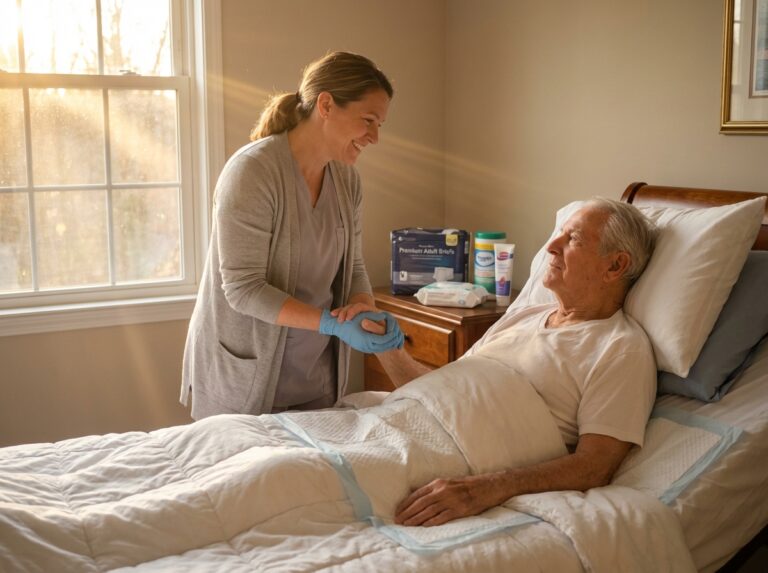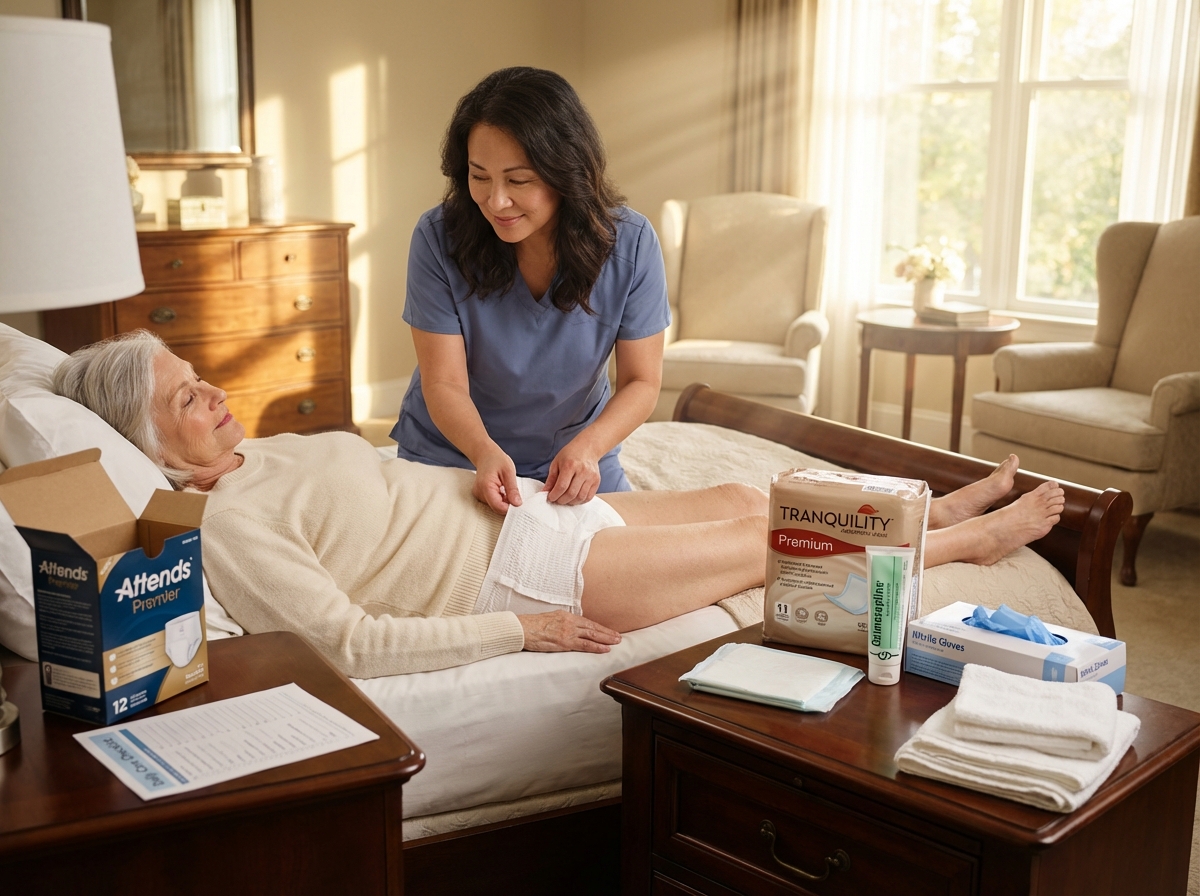
Overnight incontinence and prolonged immobility require reliable protection plus attentive bedside care. This guide reviews the best adult diapers for overnight use in 2025 and provides practical bedside hygiene routines, safe repositioning, skin protection tips, monitoring advice, and ready-to-use checklists tailored for family caregivers in the USA.
Understanding overnight incontinence and care priorities
Managing nighttime leakage in a bedbound senior is one of the most demanding tasks for a family caregiver. It is not simply a matter of hygiene. It is a clinical challenge that affects the health of the senior and the well being of the person providing care. When a senior cannot move independently, urine stays in contact with the skin for long periods. This creates a cycle of skin damage and sleep loss that can quickly spiral out of control if not managed with the right products and routines.
Common Types of Nighttime Incontinence
There are several ways that bladder control issues manifest during the night. Urge incontinence involves a sudden and intense need to urinate which often leads to a large loss of fluid before the senior can react. Overflow incontinence occurs when the bladder does not empty completely. This results in constant dribbling throughout the night. Functional incontinence is very common in bedbound seniors. It happens because physical or cognitive limits prevent them from using a commode or signaling for help. Reflex incontinence is usually related to neurological issues and causes the bladder to empty without any warning. Many seniors experience mixed incontinence which is a combination of these different types.
Risk Factors for Bedbound Seniors
Immobility is the primary driver of complications. When a person stays in one position, urine pools in the folds of the skin or under the body. Medications also play a significant role. Diuretics for heart conditions or blood pressure increase urine production. If these are taken late in the day, they ensure a heavy volume of urine during sleep hours. Cognitive impairment from dementia or Alzheimer’s makes it difficult for a senior to recognize the sensation of a full bladder. Chronic illnesses like diabetes can also increase the frequency and volume of urination. These factors combined make overnight management much harder than daytime care.
Clinical and Quality of Life Consequences
Unmanaged moisture leads to moisture associated skin damage or MASD. This happens when the skin is exposed to the ammonia and enzymes in urine for hours. The skin becomes soft and white (maceration) and loses its natural strength. This makes it very easy for the skin to tear or develop painful rashes. Pressure injuries are a related and dangerous risk. When a senior is bedbound, the weight of their body presses against the mattress. If the skin is wet, these injuries form much faster. They can turn into deep wounds that take months to heal. Sleep disruption is another major consequence. Frequent wettings wake the senior and the caregiver. This leads to chronic exhaustion and increased confusion in seniors with cognitive issues.
US Prevalence and Burden Statistics
Current data from the National Association for Continence indicates that over 25 million American adults live with some form of bladder leakage. For those receiving care at home, the numbers are significantly higher. The Agency for Healthcare Research and Quality identifies skin integrity as a top priority for home safety. The financial burden is also heavy. Families often spend thousands of dollars annually on absorbent products and laundry. The emotional toll is equally high. Managing incontinence is a leading reason why families eventually choose to move a loved one into a long term care facility.
Primary Care Goals for Overnight Management
The first priority is maintaining skin integrity. This means keeping the skin dry and intact throughout the night. Another goal is to minimize sleep interruptions. Both the senior and the caregiver need blocks of rest to stay healthy. Effective management also preserves the dignity of the senior. It reduces the risk of urinary tract infections which are a major cause of hospital visits for the elderly. Finally, using high capacity products reduces the physical burden on the caregiver by limiting the number of full linen changes required in the middle of the night.
Prioritized Outcomes for Caregivers
Caregivers should aim for these specific results every night:
- The senior has dry skin during the morning check.
- There are no new red spots or irritation on the tailbone or hips.
- The senior gets at least four to six hours of uninterrupted sleep.
- The bedroom remains free of strong urine odors.
- Linen changes are kept to a minimum or eliminated entirely.
- The senior is positioned comfortably with support to prevent pressure.
When to Escalate to a Professional
It is important to know when home care is not enough. You should contact a clinician or a wound care specialist if you see skin that stays red even after the senior is moved (a sign of a Stage 1 pressure injury). Blisters or open sores are a sign of serious damage. Fever as well as cloudy, bloody, or foul smelling urine can indicate a urinary tract infection. Do not ignore sudden changes in behavior. Increased confusion or agitation in a senior is often the first sign of a physical issue like an infection or severe skin discomfort. Professional guidance is necessary if the current products are failing to keep the skin dry despite frequent checks.
How to choose the best adult diapers for overnight use
Choosing the right protection for the night requires a different strategy than daytime care. During the day, you might change a senior every few hours. At night, the goal is to let them sleep undisturbed for eight to twelve hours. This requires a product that handles much higher volumes of fluid while keeping the skin perfectly dry. Most standard store brands fail at this because they lack the specialized polymers needed for extended wear.
Product Categories and Use Cases
Briefs with Adjustable Tabs
These are the most effective choice for bedbound seniors. You can change them without removing pants or shoes. The tabs allow you to get a custom fit around the waist and legs. This is vital for preventing leaks when a person turns in bed.
Protective Underwear or Pull-Ups
These work best for seniors who can still stand or assist with changes. They feel more like regular underwear. However, they are harder to change for someone who is completely bedbound. They often have less absorbency than tab-style briefs.
Booster Pads
These are flow-through pads you place inside a diaper. They do not have a waterproof backing. Once the pad is full, the fluid flows into the main diaper. This is an affordable way to increase capacity for very heavy wetters.
Bed Pads or Underpads
These serve as a final safety net. Disposable pads with adhesive strips stay in place better. They protect the linens if a leak occurs at the leg cuff or waist.
Core Performance Criteria
Absorbency and Acquisition Speed
Absorbency is usually measured in milliliters or ounces. For overnight use, look for products that hold at least 30 ounces. Acquisition speed is just as important. It measures how fast the core sucks up the liquid. If the speed is slow, the urine will pool and leak out before it can be absorbed.
Rewet and Retention
Rewet refers to the amount of moisture that feels wet against the skin after the diaper is full. High-quality overnight products have low rewet levels. Retention under pressure is also critical. When a senior sits or rolls over, the weight of their body can squeeze liquid out of the core. Premium brands use advanced polymers to lock that liquid in place.
Leakage Barriers and Fit
Look for tall stand-up leak guards. These are the inner ruffles that sit against the groin. They act as a dam to stop sudden bursts of fluid. To get the right fit, measure the widest part of the senior. This is usually the hips rather than the waist. A diaper that is too large will gap at the legs and cause leaks.
Skin Health and Comfort
Breathability and Materials
Fragile skin needs air. Breathable backsheets allow heat and vapor to escape while keeping liquid inside. This prevents the skin from becoming soft and prone to tearing. Many caregivers prefer chlorine-free and fragrance-free options to avoid irritation. Some products include pH-neutral cores that help maintain the natural acid mantle of the skin.
Wetness Indicators
These are lines on the outside of the diaper that change color when wet. They allow you to check the senior without opening the tabs. This minimizes sleep disruption for the senior and saves time for the caregiver.
2025 Overnight Product Comparison
| Product Line | Style | Absorbency | Price Per Unit | Pros and Cons |
|---|---|---|---|---|
| Tranquility ATN | Tab Brief | 34 oz | $0.85 – $1.25 | High capacity. Very reliable. Can be bulky. |
| NorthShore MegaMax | Tab Brief | 40+ oz | $1.40 – $2.10 | Lasts 12 hours. Tall leak guards. Higher price. |
| TENA ProSkin Overnight | Pull-Up | Heavy | $0.95 – $1.40 | Great fit. Breathable. Not for fecal incontinence. |
| MoliCare Slip Maxi | Tab Brief | Heavy | $1.05 – $1.55 | Hypoallergenic. pH balanced. Harder to find. |
Practical Testing Tips
The Sample Pack Trial
Never buy a full case of a new brand. Most specialty suppliers offer sample packs for a small fee. Test the fit during the day first. Check for red marks on the skin or gaps at the thighs. If the fit is good, move to an overnight stress test. Check the senior halfway through the night to see if the core is saturated.
Managing Comorbidities
Fecal Incontinence and Edema
If the senior has fecal incontinence, you need a product with high-capacity leak guards and a plastic or sturdy cloth-like backing. Products like the Tranquility ATN are designed for this. For seniors with edema, the legs may swell during the night. Choose products with flexible side panels that stretch without cutting into the skin.
Buying, Insurance, and Cost Management
Subscriptions and Insurance
Subscription services through sites like Carewell or NorthShore often provide a 5 to 10 percent discount. This also ensures you never run out of supplies. Medicaid coverage for diapers varies significantly by state. Most states require a doctor to sign a certificate of medical necessity stating the senior has a chronic condition causing incontinence. Medicare Part A and Part B generally do not cover incontinence supplies for home use, though some Medicare Advantage plans might offer a small monthly allowance for over-the-counter health items. Private insurance rarely covers disposable supplies, but you can often use Health Savings Account (HSA) funds. Additionally, organizations like the National Family Caregiver Support Program can sometimes provide guidance on local assistance or non-profit diaper banks.
Practical bedside care routines for overnight comfort and safety
Managing overnight care for a bedbound senior requires a structured approach to maintain skin health and ensure restful sleep. A consistent routine helps prevent complications like moisture associated skin damage or pressure injuries.
Bedside supply preparation
Pre bedtime checklist
Gather all necessary items before starting the evening routine to avoid leaving the senior unattended. You will need high capacity overnight diapers such as Tranquility ATN or NorthShore MegaMax. Keep a stack of disposable underpads plus a few cloth bed pads for extra layering. Include a gentle no rinse skin cleanser, soft wipes, and a zinc based barrier cream. Have several pairs of disposable gloves, a dedicated waste bin with liners, and fresh bed linens nearby. A small flashlight or dim bedside lamp is useful for checks without waking the senior fully.
Environment and dignity
Privacy and comfort
Close curtains and doors to create a private space. Use a sheet or towel to keep the senior covered as much as possible during the change. Explain each step quietly to reduce anxiety. Ensure the room temperature is comfortable because skin exposure can cause chilling. Dim the lights to signal that it is nighttime while maintaining enough visibility for safety.
Stepwise diaper change instructions
Safe rolling and turning
Lower the bed rail on the side you are working. Position the senior on their back with knees slightly bent. Gently roll them onto their side away from you. Use the log roll technique by keeping the head, shoulders, and hips in one line to maintain body alignment. Place a pillow behind their back for support if needed. Slide the soiled diaper inward to contain waste. Clean the perineal area from front to back using a fresh wipe for each stroke. Pat the skin completely dry before applying a thin layer of barrier cream. Slide the new diaper under the hip, ensuring the back edge aligns with the waist. Roll the senior back onto the diaper and pull the front through the legs. Fasten the tabs snugly but allow enough room for two fingers to fit under the waistband.
Skin protection and moisture management
Preventing skin damage
Moisture associated skin damage occurs when urine sits against the skin for too long. Use products with a pH neutral core to neutralize acidity. Cleanse the skin with every change even if it looks clean. Avoid scrubbing. Always pat the skin dry rather than rubbing. Apply a thin, even layer of barrier ointment to create a shield against moisture. If you notice redness that does not disappear after pressure is removed, consult a nurse as this may be a stage one pressure injury.
Repositioning and pressure prevention
Timing and angles
Change the senior’s position every two hours. Use a thirty degree tilt rather than a full ninety degree side lie to protect the hip bones. Place foam wedges or pillows between the knees and under the ankles to float the heels. Document each turn to ensure all areas get relief from pressure. If the senior uses a high capacity product like the NorthShore MegaMax, you may only need to change the diaper once or twice, but the physical position must still change every two hours.
Caregiver safety and handling
Reducing injury risk
Adjust the bed to waist height before starting. Stand with feet shoulder width apart plus one foot slightly forward for balance. Use your leg muscles instead of your back when moving the senior. Avoid reaching across the bed. Move to the other side of the bed if necessary. Use slide sheets or draw sheets to help with positioning rather than pulling on the senior’s limbs.
Overnight care plans by scenario
| Scenario | Product Choice | Routine Adjustment |
|---|---|---|
| Heavy Incontinence | NorthShore MegaMax | Check every 4 hours. Change if wetness indicator is full. |
| Low Volume Frequency | Tranquility ATN | Check every 4 hours. Reposition every 2 hours. |
| Fecal Incontinence | Tab Style Briefs | Immediate change required upon discovery. |
| Fragile Skin | Breathable Air Plus | Use extra barrier cream. Increase air time during changes. |
Documentation and communication
Nightly event log
Keep a notebook or chart at the bedside. Record the time of each check. Note the skin condition plus any new redness. Estimate urine output as small, medium, or large. If working with a respite caregiver, provide a clear written plan. Include the senior’s preferred turning side and any specific skin care products used.
Bedside Care Checklist
[ ] Supplies gathered and reachable
[ ] Bed at safe working height
[ ] Senior positioned and aligned
[ ] Skin cleansed and dried
[ ] Barrier cream applied
[ ] Diaper fastened and checked for gaps
[ ] Heels floated with pillows
[ ] Waste disposed of properly
[ ] Event logged in chart
Overnight Event Template
Date: 12/24/2025
Time | Action | Skin Observation | Output
10PM | Change | Clear | Large
12AM | Turn | Slight pink on left hip | N/A
02AM | Check | Clear | Small
04AM | Change | Clear | Medium
06AM | Turn | Clear | N/A
Frequently Asked Questions about overnight diapers and bedside care
How often should I change an overnight diaper?
The frequency depends on the absorbency of the product and the needs of the senior. High capacity options like Tranquility ATN can hold up to 34 ounces of fluid [1]. This often allows for one change during the night or even staying dry until morning. You should check for moisture every few hours if the person has fragile skin. Change the diaper immediately if there is a bowel movement to prevent infection. Using products with a wetness indicator like the MoliCare Slip Maxi helps you know exactly when a change is needed without disturbing the senior [1].
Troubleshooting Common Incontinence Issues
What causes leaks and how can I stop them?
Leaks usually happen because of a poor fit around the legs or the waist. If the diaper is too loose, fluid escapes before the core can absorb it. Side sleepers often need extra coverage in the front and rear. Products like NorthShore MegaMax have tall leak guards and leg cuffs to prevent this [3][7]. Make sure the leg elastics are snug against the skin. You can also try a different style. Tab style briefs often provide a more secure fit for bedbound seniors than pull up styles [2].
How do I choose the right size?
Measure the widest part of the hips and the waist. Use the larger of those two numbers to find the size on the manufacturer chart. A diaper that is too big will leak at the legs. A diaper that is too small will cause skin irritation or pinch the skin. Many brands like Carewell offer sizes ranging from 20 to 70 inches [2]. If the senior is between sizes, it is usually better to size down for a tighter seal around the legs.
Skin Health and Product Selection
What is the best product for fragile or rash prone skin?
Look for 100 percent breathable materials that allow air to reach the skin. Tranquility Air Plus is a great choice because it neutralizes pH levels to prevent bacterial growth [1]. Always apply a thin layer of barrier cream during every change. Avoid products with plastic backings if the senior is prone to heat rashes. Breathable cloth like outer layers help maintain skin integrity by reducing heat buildup [1].
Can I use booster pads or bed pads to extend wear time?
Yes. Booster pads add extra absorbency without making the diaper bulky. They are designed to let fluid pass through once they are full. Do not use two diapers at once. The outer diaper will not be able to breathe and this will cause skin damage. Disposable bed pads provide a final layer of safety for the mattress and linens. This reduces the amount of laundry you have to do [5].
How do I manage odor?
Choose products with built-in odor guards. Prevail AIR uses Omni Odor Guard technology to neutralize smells for up to 8 hours [2]. Regular cleaning with a gentle skin cleanser is also essential. Promptly disposing of used products in a sealed container will keep the room smelling fresh. Some caregivers use carbon filters or specialized diaper pails to manage strong odors.
Caregiver Safety and Specialized Care
How do I dispose of used diapers safely and hygienically?
Roll the used diaper tightly and use the tabs to secure it. Place it in a scented waste bag and tie it shut. Use a hands free diaper pail with a lid to keep odors contained. Dispose of these bags in your outdoor trash bin daily. This prevents the buildup of bacteria and smells in the home environment.
What are signs of skin breakdown to watch for?
Look for redness that does not go away after you reposition the senior. Watch for blisters or skin that feels hot to the touch. These are early signs of pressure injuries or moisture damage. You should also check for small sores or cracked skin. If you see these signs, increase the frequency of changes and consult a nurse.
How to handle incontinence in someone with advanced dementia who resists care?
Use pull up styles if they resist tab style briefs. TENA ProSkin pull ups are often easier for caregivers to manage in these cases [2]. Keep a calm routine and explain each step simply. Sometimes giving the senior a small object to hold can distract them during the change. If resistance becomes a safety issue, talk to their doctor about behavioral strategies.
Are reusable options safe for overnight use?
Reusable diapers often lack the advanced wicking technology found in high end disposables. They may keep moisture against the skin longer. For heavy overnight needs, disposables like Tranquility ATN are usually safer for skin health [4]. If you prefer reusables, you must change them much more frequently to prevent rashes.
| Issue | Quick Troubleshooting Step | Red Flag |
|---|---|---|
| Frequent Leaks | Check leg cuff fit and size. | Skin breakdown at leg area. |
| Strong Odor | Switch to odor blocking brands. | Cloudy or bloody urine. |
| Skin Redness | Apply barrier cream and change more often. | Open sores or blisters. |
| Product Sagging | Try tab style briefs with refastenable tapes. | Senior falling due to bulky diaper. |
Conclusions and practical takeaways for caregivers
Choosing the right overnight care strategy changes everything for a family caregiver. It is not just about the product. It is about the sleep you get. It is about the skin health of your loved one. High capacity briefs like the Tranquility ATN or the NorthShore MegaMax are the gold standard for 2025. These products handle multiple wettings without leaking. They keep the skin dry for up to 12 hours. This means fewer middle of the night changes. It means less laundry. It means more rest for everyone in the house.
Product Recommendations for Common Situations
Always match the product to the level of mobility. Heavy overnight leakage requires maximum absorbency tab style briefs like the NorthShore MegaMax, which features a plastic backing to prevent sagging and tall leak guards. For seniors who are still mobile, pull ups like the TENA ProSkin Overnight Super Protective Pull Up are better as they fit like regular underwear. If you only deal with occasional light leaks, use liners or booster pads placed inside a standard diaper to add extra capacity.
Prioritized Checklist of Immediate Actions
Start by trialing products. Do not buy a whole case yet. Order samples from manufacturers or specialized retailers. Test them for two nights each. Set up an overnight plan. Keep all supplies within reach of the bed. This includes wipes. It includes barrier creams. It includes fresh diapers. It includes gloves. Follow a safe repositioning routine. Turn your loved one every two to four hours if they cannot move. This prevents pressure sores. Use a draw sheet to help with the turn. Skin care is the next step. Clean the skin gently with pH balanced wipes. Apply a thick layer of moisture barrier cream. Document everything. Keep a log of change times. Note the skin condition. Record how much fluid they drank. This data helps when you talk to a doctor.
Caregiver Safety and Self Care
Your health matters. Use proper lifting techniques. Keep your back straight. Bend your knees. Use slide sheets to move a senior in bed. Do not try to lift them alone if they are heavy. Take breaks. Sleep when you can. If the overnight routine is too much, look for respite care. A tired caregiver is more likely to make mistakes. Your safety is the foundation of their care.
Innovations to Watch in 2025
Technology is making care easier. New core materials are thinner. They absorb more fluid. They lock it away faster. Smart moisture sensors are becoming common. These small devices clip onto the diaper. They send an alert to your phone when the diaper is wet. This prevents unnecessary checks. It keeps the senior from sitting in moisture. Look for brands integrating these sensors this year. They are a significant help for managing bedbound patients.
Printable Summary Checklist
Follow these steps tonight for better care.
1. Check the fit of the diaper. Ensure there are no gaps around the legs.
2. Apply a barrier cream to clean skin. This creates a shield against moisture.
3. Place a waterproof pad on the bed. This is a backup for the diaper.
4. Set a timer for the next repositioning. Stick to the schedule.
5. Prepare a clean change kit. Have it ready by the bedside.
6. Check the wetness indicator before waking them. Only change if necessary.
7. Take a deep breath. You are doing a great job.
References
- Top 10 Best Overnight Diapers for Adults [2025] – Vitality Medical — The Tranquility ATN briefs are extraordinary for absorbency. The briefs can contain up to 34 fluid ounces of urine. Most manufacturers of …
- 6 Best Overnight Adult Diapers of 2025 – Carewell — Customer Review: “These diapers are great for my MIL. She uses the maximum absorbency and she stays dry longer. They are not super thick and …
- Best Adult Diapers for Heavy Leakage: Top Brands Compared — TENA ProSkin earns high satisfaction ratings from both users and healthcare professionals for its anatomical fit and superior overnight dryness.
- 9 Best Selling Maximum Absorbency Adult Diapers for 2025 — Tranquility ATN (All-Through-the-Night) Adult Diapers are designed to provide maximum overnight protection for individuals with heavy …
- The Best Adult Diapers & Protective Underwear of 2025 – Parentgiving — Top Adult Diapers for 2025 · 1. Dry Direct Ultimate Protective Underwear – Unisex · 2. Dry Direct Super Overnight Underwear · 3. MoliCare Slip Maxi Overnight Adult …
- 5 Best Adult Diapers In 2025 (No Matter Your Size) – YouTube — Adult Diapers are listed down below: ▻ 5. NorthShore MegaMax Adult Overnight Diapers – https://geni.us/og9xhhB ▻ 4. Depend Night Defense Adult …
- NorthShore MegaMax 12-Hour Overnight Diaper Style Briefs — Massive absorbency keeps skin dry for up to 12 hours with MegaMax. The oversized absorbent core quickly wicks away fluids, keeping skin dry even after 2-3 …
- 7 Best Overnight Diapers for Adults | Wellnessbriefs — Wellness Brief Superio Adult Diapers … This is one of the most effective and best overnight diapers for elderly in the market from one of the …
Legal Disclaimers & Brand Notices
The content provided in this article is for informational purposes only and does not constitute professional medical advice, diagnosis, or treatment. Always seek the advice of your physician or another qualified health provider with any questions you may have regarding a medical condition, skin integrity, or clinical care routines. Never disregard professional medical advice or delay in seeking it because of something you have read in this article.
All product names, logos, and brands mentioned in this text are the property of their respective owners. All company, product, and service names used in this article are for identification purposes only. Use of these names, logos, and brands does not imply endorsement or affiliation.