This guide helps family caregivers safely and efficiently change adult diapers in bed for bedbound seniors. It covers preparation, a step-by-step clean method, skin and pressure injury prevention, and final takeaways. Follow up-to-date US guidance and practical checklists to protect dignity, prevent infection, and keep routine changes fast and comfortable.
Preparing for a safe comfortable diaper change
Successful care for a bedbound loved one starts long before the actual change begins. Proper preparation reduces the time a person spends exposed. It also protects the caregiver from physical strain. When you have a system in place, the process becomes a routine health check rather than a stressful event. This chapter outlines how to set the stage for a safe, dignified, and efficient diaper change.
Essential Supplies for the Bedside
Having everything within arm’s reach is a safety requirement. You should never leave a bedbound person alone while the bed is in a raised position or when side rails are lowered. Use a stable tray or a bedside table to organize your items.
Core Supplies Checklist
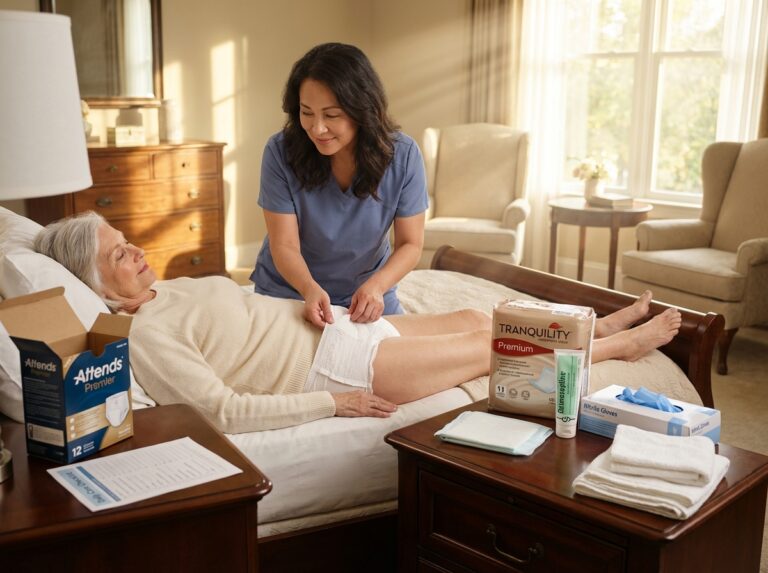
Disposable gloves are the first line of defense for infection control. You will need a clean adult brief in the correct size. Using a size too large causes leaks, while a size too small causes skin irritation. Include a disposable underpad or chux to protect the bed linens. Use a gentle pH-balanced no-rinse cleanser or specialized incontinence wipes. These are better for the skin than standard soap. Keep a skin barrier cream or zinc oxide ointment ready to prevent moisture damage. You will also need a plastic disposal bag for soiled items. Keep a clean sheet and pillowcase nearby in case of accidents. A dry towel and hand sanitizer are necessary. Ensure a trash receptacle is placed next to the bed. Good lighting is vital for inspecting the skin.
Optional Comfort and Utility Items
A waterproof mattress protector provides a permanent layer of safety for the bed. A draw sheet helps with repositioning the person without dragging their skin. Leg lifters or a trapeze bar can assist if the person has some upper body strength. A bedside commode is useful if the person can transition out of bed. For those with very dry skin, keep an emollient or moisturizer available to apply to non-soiled areas.
Setting Up the Environment
The physical space must be adjusted to protect your body and the person’s privacy. Start by locking the wheels on the bed. This prevents the bed from moving while you are leaning against it or turning the person. If the bed is adjustable, raise it to a height that allows you to work without bending your back. This is usually at the level of your waist or hips.
Lower the side rail on the side where you are working. Keep the opposite rail up to provide a point of security for the person to hold. Arrange your supplies on the bedside tray so you do not have to turn away from the person to reach them.
Privacy is a matter of dignity. Close the bedroom door or pull a privacy curtain. Use a light blanket or a “bath blanket” to cover the person’s chest and legs. Only expose the pelvic area during the actual cleaning. This helps the person feel less vulnerable and keeps them warm. Ensure the room is well-lit so you can see changes in skin color or texture. For nighttime changes, consider using a small dim light instead of bright overhead fixtures to keep the environment quiet and conducive to sleep.
Communication and Cognitive Support
Explain every step before you take it. Use the person’s name and speak in a respectful, adult tone. Even if the person seems unresponsive, they may still understand your voice. Offer choices whenever possible. You might ask if they are ready to turn to the left or the right.
Watch for non-verbal signs of pain. These include grimacing, bracing, or holding their breath. If you see these signs, stop and adjust your movement.
Strategies for Cognitive Impairment
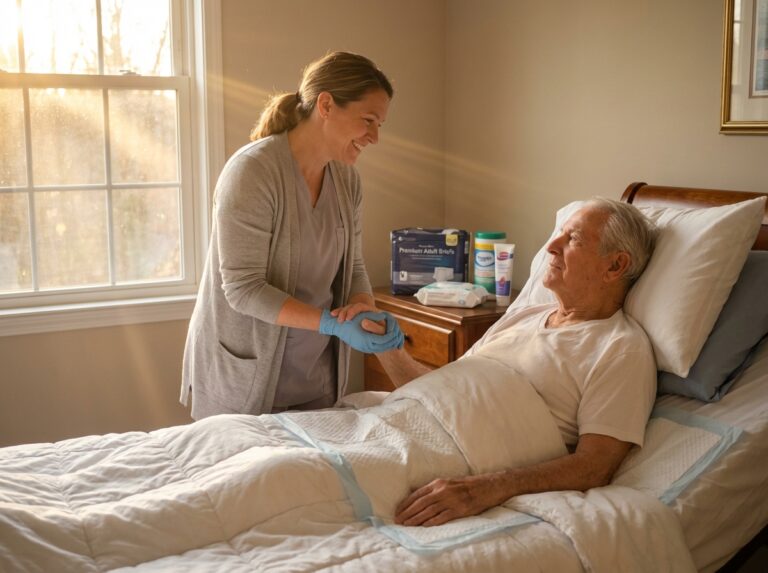
For individuals with dementia, a diaper change can be confusing or frightening. Use a calm and steady voice. Avoid rushing the process. Distraction can be very effective. You might play familiar music or give the person a small towel to hold. This keeps their hands busy and provides a sense of security. If the person becomes agitated, stop the process for a few minutes. Reapproach them with a gentle touch and a smile. Hand-holding can sometimes provide the grounding they need to feel safe.
Caregiver Safety and Body Mechanics
Your health is just as important as the person you are caring for. Caregiver burnout often stems from physical injuries. Always maintain a neutral spine. This means keeping your back straight and not arching it.
Bend at your knees and hips rather than your waist. When you need to move the person, bring them as close to the edge of the bed as safely possible. This reduces the distance you have to reach. Avoid twisting your torso. Instead, pivot your feet to change direction.
If the person is heavy or cannot assist with the turn, do not attempt the change alone. Call for help from another family member or a professional aide. Using a draw sheet to roll the person is much safer than pulling on their limbs. According to 2025 NPIAP guidelines, repositioning should be done with a focus on reducing shear and friction on the skin.
Infection Prevention and Skin Pre-checks
Infection control is a primary goal of bedside care. Perform hand hygiene before putting on your gloves. Use sanitizer or wash with soap and water. Change your gloves if they become heavily soiled during the process.
Avoid cross-contamination by using single-use wipes. Always wipe from the front to the back. This is especially important for women to prevent urinary tract infections. Place soiled linens directly into a laundry bag. Do not place them on the floor or on other furniture.
Before you begin the cleaning, perform a quick skin inspection. Look for redness that does not go away when pressed. This is a sign of a stage one pressure injury. Check for rashes, unusual odors, or swelling. These can be signs of a UTI or a fungal infection. If the person has a urinary catheter, check that the tubing is secure and the bag is below the level of the bladder. If there is an ostomy, ensure the pouch is intact and the skin around it is healthy.
Incontinence Statistics and Risks
Recent data shows that more than 25 million adults in the United States live with some form of incontinence. You can find more details on these trends through Aeroflow Urology. Incontinent individuals are five times more likely to be diagnosed with a urinary tract infection. They are also twice as likely to experience incontinence-associated dermatitis. Regular monitoring during every change is the best way to catch these issues early.
Caregiver Preparation Checklist
| Category | Action Item |
|---|---|
| Safety | Lock bed wheels and raise bed to waist height. |
| Privacy | Close door and use a privacy blanket. |
| Supplies | Gloves, clean brief, wipes, and barrier cream ready. |
| Infection Control | Sanitize hands and prepare disposal bags. |
| Skin Check | Inspect for redness, odor, or catheter issues. |
| Communication | Explain the steps and use a calm tone. |
Step by step clean and fast changing technique
Changing a brief in bed requires a balance of speed and gentleness. You have already gathered your supplies and ensured the room is warm and private. Now you must focus on the physical process. This method minimizes skin friction and protects your back while keeping the person comfortable. With over 25 million adults in the United States experiencing some form of incontinence, mastering this bedside skill is essential for home care. You can find more context on these numbers at How Common is Urinary Incontinence in Adults?. Current 2025 data shows that home healthcare services see the highest prevalence of incontinence at 24.5 percent, making these practical steps vital for family caregivers.
Safe Positioning and the Log Roll
The Log Roll Technique
Start by lowering the bed rail on your side if the bed is adjustable. Ask the person to look toward the side they will be turning. Bend their opposite knee if their range of motion allows. Place one hand on their shoulder and the other on their hip. Gently roll them onto their side away from you. If you have a draw sheet or a sturdy underpad beneath them, use it to help pull them toward the center of the bed before rolling. This prevents them from getting too close to the edge. For those with very limited movement, use a micro roll. This involves tilting them just enough to tuck the soiled brief underneath their hip rather than a full side turn.
Two Person Assistance
If the person is heavy or cannot assist with the turn, ask a second caregiver for help. One person holds the shoulder and hip to maintain the side position. The second person performs the cleaning and diaper placement. This prevents the person from rolling back prematurely. It also protects your spine from strain. Always bend your knees and keep a neutral spine. Avoid twisting your torso while holding the person in place.
Removing the Soiled Brief
Containing the Mess
Unfasten the tapes or tabs on both sides. Fold the front of the brief down and inward toward the center. This traps the waste inside and keeps it away from the skin. If there is heavy stool, use the front of the brief to gently wipe away the bulk of it as you fold it down. Once the person is rolled onto their side, roll the soiled brief into a tight bundle toward their back. Tuck it as far under their hip as possible. This ensures that when you roll them back later, they do not land on the soiled surface.
Hygiene and Cleaning Technique
Front to Back Cleaning
Use a fresh wipe for every stroke. For female anatomy, always wipe from the front toward the back. This is the most important step to prevent urinary tract infections. Recent 2025 clinical reports indicate that incontinent patients are five times more likely to develop a UTI. Using separate wipes for skin folds and the labia prevents the spread of bacteria. For male anatomy, clean the tip of the penis first and move downward. If the person is uncircumcised, gently retract the foreskin to clean and return it immediately to its natural position.
Managing Heavy Soil
If there is significant bowel movement, use a no rinse pH balanced skin cleanser. These products break down waste better than plain water. Avoid scrubbing the skin. Pat the area dry with a soft towel. Friction from rubbing can cause micro tears in the skin. Incontinent patients are twice as likely to experience incontinence associated dermatitis. If the skin is tolerant, you may use a washbasin with mild soap. Always rinse thoroughly if you use soap. Call a clinician if you notice uncontrolled diarrhea, blood in the stool, or if the skin appears bright red and blistered.
Applying Skin Protection
Barrier Application
Apply a thin, even layer of skin barrier cream or zinc oxide. You only need enough to create a slight sheen on the skin. Do not glob the cream on. Excessive product buildup can clog the pores of the clean brief and reduce its absorbency. This leads to leaks and trapped moisture. Focus the cream on areas that have frequent contact with urine or stool. This layer acts as a shield against the acidic nature of waste. It is a primary defense against skin breakdown in bedbound seniors.
Putting on the Clean Brief
Centering and Fitting
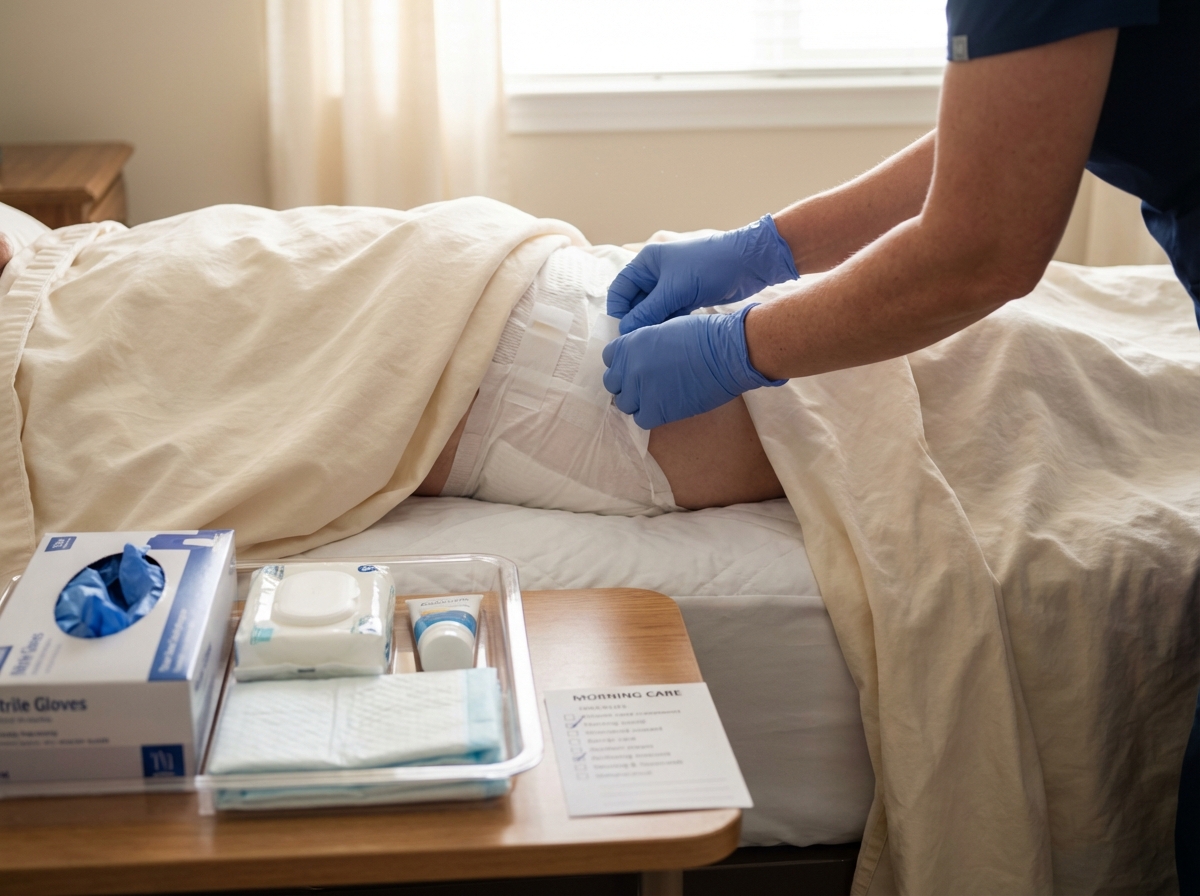
Open the clean brief and fold it lengthwise like a taco. This helps the absorbent core cup the body. Slide the back half of the brief under the person while they are still on their side. Align the top of the brief with their waistline. Ensure the padding is centered under the hips. Roll the person back onto their center. Pull the front of the brief up between their legs. Smooth out any wrinkles in the fabric. Wrinkles create pressure points that lead to sores. Check the leg gathers. Run your finger around the elastic to ensure the ruffles are pointing outward. This prevents leaks. Fasten the tabs securely but leave enough room for two fingers to fit at the waist. If the person has a catheter or ostomy, ensure the tubing or pouch is not kinked or pinched by the waistband.
Cleanup and Disposal
Final Steps
Slide the soiled brief and any disposable underpads out from under the person. Seal them in a plastic disposal bag immediately to control odor and bacteria. Many caregivers use a dedicated diaper pail with a tight lid to manage odors effectively. Place soiled linens in a dedicated laundry bag. Remove your gloves by peeling them away from your wrist so they turn inside out. Perform hand hygiene with soap and water or a high alcohol sanitizer. Check the person one last time for comfort. Ensure their hips can move freely and they are not pinned by the brief.
Time Saving Tips and Special Situations
Efficiency Hacks
Keep a portable caddy stocked with gloves, wipes, and briefs next to the bed. Pre fold your briefs so they are ready to slide into place. Using a disposable chux pad under the hips during the change can catch unexpected leaks. For nighttime, consider using superabsorbent overnight briefs. These can hold more volume and may reduce the need for frequent night changes. This allows both the caregiver and the senior to get more rest.
Dementia and Resistance
If the person becomes agitated, use a calm and steady voice. Explain each move before you make it. Sometimes giving them a small towel to hold provides a distraction. If they resist strongly, stop for a few minutes and try again. Safety is the priority. Stop the process and seek medical help if you see deep open wounds, excessive bleeding, or if the person experiences intense pain during movement. Following these 2025 protocols from the WOCN and NPIAP ensures the highest standard of home care.
Skin care prevention and product selection
Skin health is the most critical factor in long-term bedside care. When an adult is bedbound, their skin faces constant threats from moisture, friction, and pressure. These three elements work together to cause rapid breakdown. Moisture from urine or stool softens the skin. This process is called maceration. Softened skin tears easily when it rubs against sheets or diaper materials. Pressure from lying in one position for too long cuts off blood flow to the tissues. This leads to pressure injuries. Incontinence adds another layer of danger. Urine changes the skin pH and stool contains enzymes that eat away at the skin surface. This irritation is known as incontinence associated dermatitis or IAD. Research shows that patients with incontinence are twice as likely to experience IAD. They also face a five times higher risk of developing a urinary tract infection. You can read more about how common these issues are in the Aeroflow Urology report on incontinence prevalence.
Daily Skin Care Routine
Consistency prevents most skin issues. Clean the skin immediately after every incontinence episode. Use a pH-balanced no-rinse cleanser for routine care. These products remove waste without stripping natural oils. Avoid traditional bar soaps because they are too alkaline and dry out fragile skin. Use plain warm water only when you need to remove heavy stool. Always use a pat-dry technique with a soft towel. Never rub the skin. Rubbing creates friction that causes micro-tears. Once the skin is dry, apply a barrier product. This routine should happen every time the diaper is changed. If the skin appears thin or fragile, use extra caution. Avoid using washcloths with rough textures. Disposable soft wipes are often safer for the skin barrier.
Product Guidance for Bedside Care
Choosing the right product depends on the needs of the senior and the caregiver. Disposable briefs with tabs are the standard for bedbound care. They allow you to change the person without pulling a garment over their legs. This protects the hips and knees from unnecessary movement. Look for products with superabsorbent polymers or SAP. These materials turn liquid into a gel. This keeps moisture away from the skin even under the weight of the body. Breathability is another key feature. Products with cloth-like outer layers allow heat and vapor to escape. This reduces the risk of heat rashes. For overnight care, use high-capacity briefs designed for 8 to 12 hours of protection. These reduce the number of times you must wake the person for a change. Ensure the product has tall leg cuffs or leak guards. These stand up inside the brief to catch liquid before it escapes. Sizing is vital. A brief that is too small will pinch and cause pressure marks. One that is too large will leak. Measure the waist and hips. Use the larger of the two numbers to select a size.
Usage and Frequency
Most adults require a change every three to four hours during the day to prevent skin breakdown. Disposable products are designed for single use only and should never be washed or reused. Washing them destroys the superabsorbent polymers and compromises the integrity of the leak guards. Reusing a soiled or damp brief significantly increases the risk of skin infections and urinary tract infections.
Product Comparison for Home Care
| Product Type | Best Use Case | Key Benefit |
|---|---|---|
| Disposable Briefs (Tabs) | Bedbound seniors | Easy to change without lifting legs |
| Pull-up Underwear | Mobile or semi-mobile | Feels like normal underwear |
| Overnight Briefs | Nighttime use | Maximum SAP for 8+ hours |
| Absorbent Pads/Liners | Light leakage | Can be used inside regular underwear |
| Washable Underwear | Very light dribbling | Eco-friendly and cost-effective |
Barrier Products and Topical Care
Barrier products create a shield between the skin and waste. Zinc oxide is a common choice for heavy protection. It is a thick white paste that stays on the skin even with frequent moisture. It is excellent for managing diarrhea. Dimethicone is a silicone-based alternative. It is usually clear and feels like a lotion. It is better for daily prevention because it allows you to see the skin underneath. Apply these products in a thin and even layer. Do not glob the cream on. Too much product can transfer to the diaper. This clogs the fibers and prevents the diaper from absorbing urine. If you see signs of a fungal infection like a bright red rash with small dots, consult a doctor. They may prescribe an antifungal cream. Only use steroid creams under medical supervision. These can thin the skin if used incorrectly.
Pressure Injury Prevention
Repositioning is the only way to stop pressure injuries before they start. The National Pressure Injury Advisory Panel or NPIAP recommends turning high-risk individuals every two hours. Use a draw sheet to slide and turn the person. This prevents shearing which happens when skin sticks to the sheet while the body moves. Use pillows to bridge bony areas. Place a pillow between the knees and ankles when the person is on their side. Ensure the heels are floated off the mattress using a pillow under the calves. Nutrition plays a major role in skin strength. A diet high in protein and adequate hydration helps the body repair tissues. According to Stryker research on incontinence in older adults, hospital settings see high rates of these complications, making home prevention even more important.
Sample Repositioning Schedule
08:00 AM: Left Side (Pillow between knees)
10:00 AM: Back (Heels floated)
12:00 PM: Right Side (Pillow between knees)
02:00 PM: Back (Head of bed slightly raised)
04:00 PM: Left Side
06:00 PM: Back
08:00 PM: Right Side
10:00 PM: Back (Check for final night change)
Monitoring and Documentation
Inspect the skin every single day. Look for any areas of redness that do not turn white when you press on them. This is a Stage 1 pressure injury. Keep a daily log of what you see. Record the location, size, and color of any marks. If you notice a blister or an open wound, contact a primary clinician or a wound care nurse immediately. You can take photos of the area to track if it is getting better or worse. This documentation helps healthcare providers make better decisions about treatment. Use the NPIAP staging system to describe wounds accurately during telehealth visits.
Cost and Supply Management
Managing incontinence supplies is expensive. The annual cost of treatment in the US exceeds 65 billion dollars. To save money, buy in bulk from medical supply companies rather than retail stores. Many manufacturers offer free samples so you can test the fit before buying a large case. Medicare Part B does not typically cover disposable diapers. However, some Medicare Advantage plans or Medicaid programs do provide coverage for these items. Work with a Durable Medical Equipment or DME supplier to see if the senior qualifies for assistance. Professional evaluations from a nurse can sometimes lower costs. They can help you find the right absorbency level. This prevents the waste of using expensive high-capacity products when a lighter version would work. Proper care prevents hospitalizations for infections or wounds. This saves the most money in the long term.
Final results and practical next steps
Managing incontinence at home is a significant responsibility that requires both technical skill and emotional resilience. Success in caregiving comes down to a routine that prioritizes speed and hygiene. You must have your supplies ready before you start to prevent leaving the senior alone or having to stop mid-process. The rolling method is the most efficient way to change a diaper in bed. It protects your back. It also keeps the senior comfortable. Always clean from front to back to prevent infections. Skin protection is the final step. Using a barrier cream creates a shield between the skin and moisture, significantly reducing the risk of dermatitis.
Immediate Next Actions
- Trial a product sample. Many manufacturers offer free samples. You can test different absorbency levels without buying a full pack. Look for products with superabsorbent polymers. These turn liquid into gel and keep the surface dry.
- Set up a supply caddy. Keep everything in one portable bin. Include gloves, wipes, barrier cream, and fresh briefs. This saves time during nighttime changes.
- Schedule a clinician check. If you notice persistent redness or frequent leaks, talk to a doctor. Leaks often mean the size is wrong or the absorbency is too low.
- Arrange caregiver training. If the senior is heavy or difficult to move, ask for a home health visit. A professional can show you safe lifting techniques to avoid injury.
Monitoring and Documentation
Keeping a daily log is a simple way to track health. Note the time of each change and the condition of the skin. This helps you spot patterns. You might notice that leaks happen more often after certain meals or medications. A log also makes it easier to talk to doctors. You can provide exact data instead of guessing. Research published in the Journal of Wound Ostomy and Continence Nursing in 2025 highlights that home healthcare has the highest prevalence of incontinence at 24.5%. This underscores the importance of rigorous monitoring at home. Use a simple table to track daily status.
| Time of Change | Skin Condition | Soiling Level | Notes |
|---|---|---|---|
| 8:00 AM | Clear | Heavy Wet | No leaks observed |
| 12:00 PM | Slight Redness | Medium Wet | Applied barrier cream |
| 4:00 PM | Clear | Soiled | Front to back cleaning |
Safety and Red Flags
There are times when home care is not enough. You must call a primary clinician or 911 if you see dangerous signs. These include uncontrolled bleeding or a high fever. Sudden severe pain or uncontrolled agitation are also red flags. Watch for signs of sepsis like confusion or a rapid heart rate. Incontinent individuals are significantly more likely to get a urinary tract infection. These infections can turn into sepsis quickly in older adults. Always follow the specific product manufacturer instructions for fit and disposal. Consult up to date US clinical resources for the latest guidance. The Centers for Disease Control and Prevention (CDC) provides guidelines on infection control. The Wound, Ostomy, and Continence Nurses Society (WOCN) offers professional protocols for skin care. For information on pressure injuries, consult the National Pressure Injury Advisory Panel (NPIAP). Medicare may cover some supplies if you use an approved durable medical equipment provider.
Seeking help early is a sign of strength. It protects you from injury and ensures the senior receives the best care.
Emotional Support Tips
Caregiving is physically and emotionally demanding. You are not alone in this task. Many local groups offer support for family caregivers. Seeking help early prevents burnout and injury. Use resources like the AARP or local senior centers. If you feel overwhelmed, call a crisis hotline. Taking care of yourself is part of taking care of your loved one. The economic impact of incontinence is vast. The annual cost in the U.S. exceeds 65 billion dollars. This includes medical visits and supplies. Understanding the scale of this issue can help reduce the shame often associated with it. According to the How Common is Urinary Incontinence in Adults? – Aeroflow Urology survey, 62% of women ages 20 and over have urinary incontinence. This is a common medical condition. It is not a personal failure.
Prevalence and Risk Data
The global incontinence products market is projected to reach 15.3 billion dollars by 2025. This growth is driven by an aging population. Studies show that 75% of women over 65 report bladder leakage. This is documented in the Association of Chronic Conditions With Bladder Health in Women report. High prevalence rates are also seen in clinical settings. A study in a large U.S. hospital database reported 33% of patients with urinary incontinence. You can read more about this in the Examining the prevalence of incontinence in older adults – Stryker analysis. These numbers show that you are part of a large community of caregivers facing similar challenges. Stay informed and stay practical.
References
- How Common is Urinary Incontinence in Adults? – Aeroflow Urology — More than 25 million adults in the US have incontinence. According to a survey by Aeroflow Urology, 62% of women ages 20 and over have urinary incontinence.
- Examining the prevalence of incontinence in older adults – Stryker — A study from a large database in U.S. hospitals reported 33% of patients with urinary incontinence. The prevalence of incontinence was found to …
- Urinary Incontinence – StatPearls – NCBI Bookshelf – NIH — Stress urinary incontinence: 24% to 45% in women older than 30 · Urge urinary incontinence: 9% in women aged 40 to 44, 31% in women older than 75 …
- Urinary Incontinence in Women Statistics – Phoenix Physical Therapy — Of the 25 million adult Americans suffering from some form of urinary incontinence, 75-80% of those are women. · Urinary Incontinence affects 200 million people …
- The Impact of Incontinence: Key Statistics and Market Trends to Know — According to the National Institute of Diabetes and Digestive and Kidney Diseases (NIDDK), an estimated 25 million adult Americans experience some form of …
- Understanding Female Bladder Leakage: Causes, Types, and … — Older Adults: Women over 50 have the highest incidence rates, with up to 75% of women over 65 reporting bladder leakage. Studies show that women …
- Incontinence – United States | Statista Market Forecast — The average volume per person in the Incontinence market is projected to be 1.2kg units in 2025. The United States has seen a rise in demand for eco-friendly …
- Association of Chronic Conditions With Bladder Health in Women — Overall, less than 10% of the cohort reported urgency and less than 10% reported stress urinary incontinence at least 50% of the time in the …
Legal Disclaimers & Brand Notices
The content provided in this article is for informational purposes only and does not constitute professional medical advice, diagnosis, or treatment. Always seek the advice of your physician or other qualified health provider with any questions you may have regarding a medical condition, infection control, or the management of pressure injuries. Never disregard professional medical advice or delay in seeking it because of something you have read in this article.
All product names, logos, and brands mentioned are the property of their respective owners. Reference to these trademarks is for identification purposes only and does not imply affiliation or endorsement.